What do I need to get started? This is probably the most asked question I get since I entered this business. I've spent more time walking people around the shop to the different "departments" showing them what they need to get started than anything else. So here is my list of things you need, and the ballpark cost to get started.
Let's start with the fly rod. This is easily the most important thing you can invest in! When you're fly fishing the rod does all of the work, so its important that you find the right balance between power and finesse. Beginners typically benefit from using a "faster" rod because faster rods aren't as clumsy, and have to be cast with a little more power -something anyone coming from a more conventional way of fishing is already used to.
By fast, I mean stiff without a lot of give through the bottom two thirds of the rod. The soft tip is important for keeping your flies from breaking off when using light leaders. Beginning casters have a few bad habits that are inherited from casting traditional spinning rods. The biggest and worst bad habit of them all is that beginners "break" their wrist.
When you're casting a fly rod you're suppose to have your wrist locked while your arm does the casting. Breaking your wrist means that you are casting with a back and forth motion without your wrist being locked. If you have a noodle (a really slow extremely flexible rod) then your casting stroke will be all over the place as you break your wrist which will result in a lot of messes and frustration. The odds of you staying in the sport and getting everything you could out of the experience are not good when you spend your entire time on the water cleaning wind knots.
The other factor to consider is convenience. Fly rods break down in either two or four pieces. Before you ask, no a rod that breaks down into four pieces does not lose its action or integrity. Four piece rods are just as durable as the two piece rods, and that's why they cost fifteen to thirty dollars more on average. Four piece rods fit in your trunk, on the airplane, strapped to a backpack, or to the side of your motorcycle. A good four piece 9 ft 5 weight fly rod for beginners with a lifetime warranty is going to start around $200. You can get a rod for $100, but most rods in that price range will not come with a warranty, or the extras bells and whistles like a case to hold your new rod in. My personal favorite rods in the entry level price range are the St. Croix Imperial, Orvis Clearwater, and the Redington Classic Trout rod.
The next thing you need is a reel. Like anything else in this world, you can spend as little, or as much as you want on this. Reels are what most of us in the shop refer to as "line holders". That is the reel's soul purpose unless your catching huge fish and you need a serious drag system. Barring a little beginners luck, catching huge fish wont be happening very often at this stage of the game. The other issue is the weight of the reel, which affects the balance of your outfit, and plays a role in fatigue after a full days fishing. The lighter the reel the more expensive it usually is. A good beginners reel from Orvis starts around $50. Fly lines are priced anywhere between $29.99-$100.
If somebody tells you that you need anything else other than leaders, tippet, and flies after you have purchased your fishing combo they're lying. Nine foot 5x leaders, and 5x and 6x spools of tippet, and a selection of fly patterns that work locally are all you would really need at this point to start your flyfishing adventure. However, there are other things to own that are crucial to your comfort and enjoyment on the water.
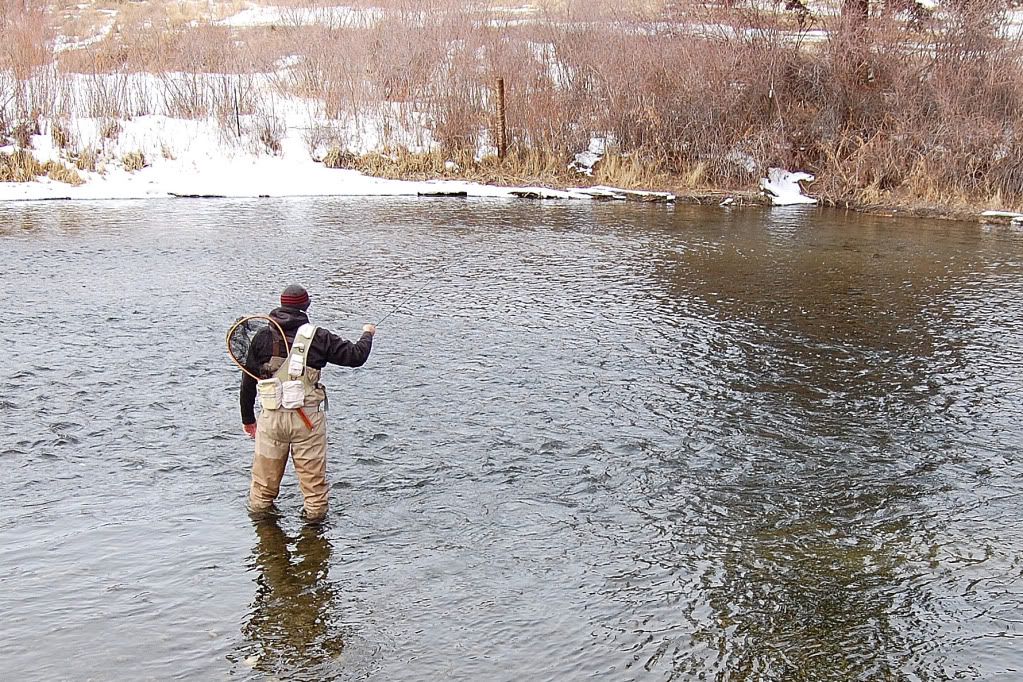
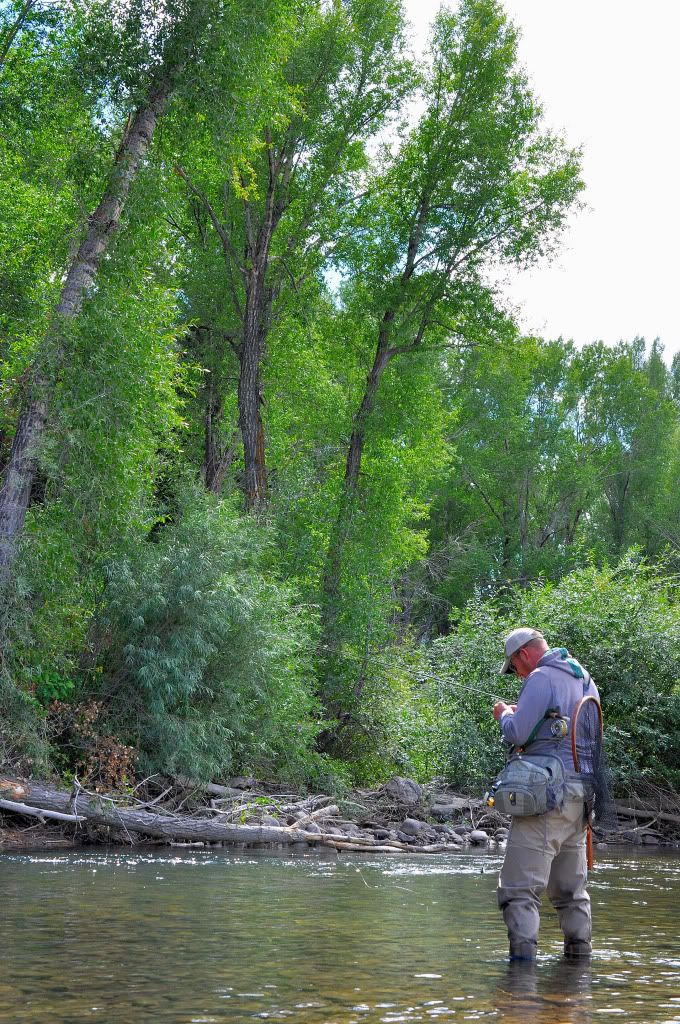
Even in the heat of summer that water can be cold, so if you plan on wading it would be a good idea to own a pair of waders and wading boots. Simms is using Gore-tex in many of their wader models. Gore-tex is the ultimate breathable water proof material. It is extremely durable, and the models made with five layers at the knee will also keep you warmer in the winter months. Simms Gore-tex chest waders made in Bozeman Montana retail around $350. A basic nylon shell without Gore-tex starts around $150 and will last a season. A good pair of cleated wading boots starts around $80.

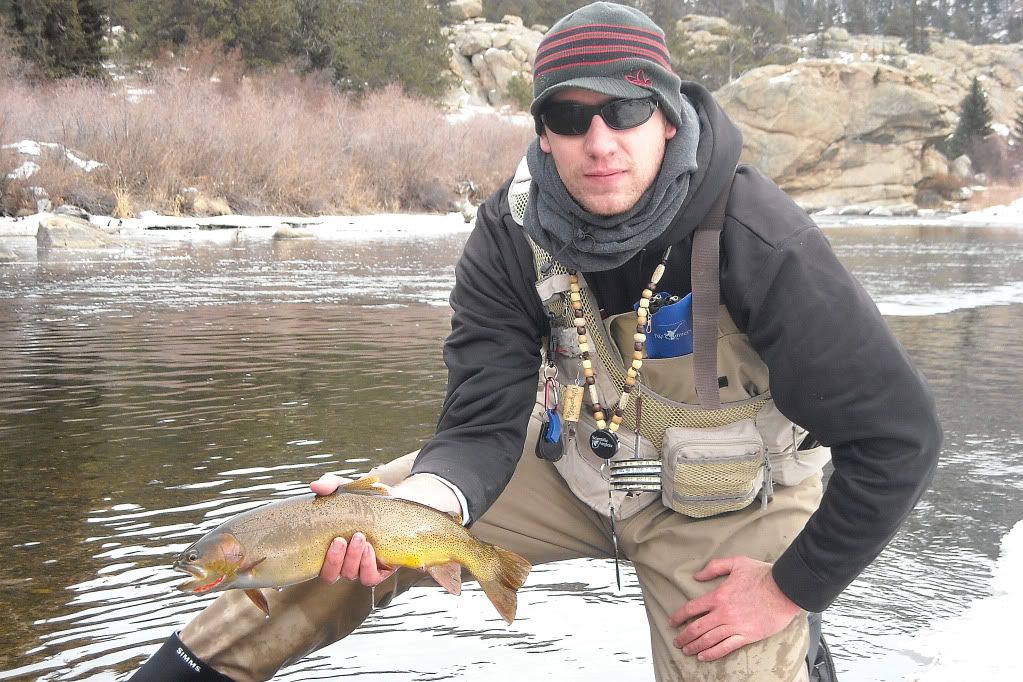
A really good pair of polarized sunglasses! This is one insanely underrated piece of equipment that is so important to your success on the water. Sight fishing is such a huge part of fly fishing. Seeing the fish is the first step to catching the fish. When im shopping for polarized glasses there are a few qualities that I look for. Nice thick frames on the sides which helps to cut out side glare on the inside of your lens. I look for gray or dark gray lenses because gray doesn't drown out natural colors. The copper and yellow lenses turn everything you are looking at to a copper or yellow tone, and -for me anyway- that serves as a distraction.
This is why most polarized filters for camera lenses are gray. It would be distracting if you were looking at a photo and the whole thing was tinted copper, unless that was your intention. Same concept applies here. I sight fish by looking for shades of green, red, and brown on the fish and when you're distracted by another color in the mix its hard on your eyes. Note: this is my theory on sunglasses for my eyes, and this might not be your experience. Everyone's eyes are different. Some guys will tell you the opposite, so I would tell you to go out and try the different colors and do a little research before you make your investment.
A landing net is self explanatory. They come in all different shapes and sizes. Some with nylon net bags, others with rubber net bags. This is one area where you can earn style points. There a ton of cool looking nets in all shapes, colors, and sizes. I will say that even though they are more expensive, the nets with rubber net bags are better. Rubber net bags are better for the fish because they don't strip the slimy protective coating that protects it's skin. Your hooks don't get stuck in the rubber like the do with mesh nylon, which saves you time and sanity. A good net with a nylon bag starts at $30 dollars, and a good net with a clear rubber net bag starts around $100.
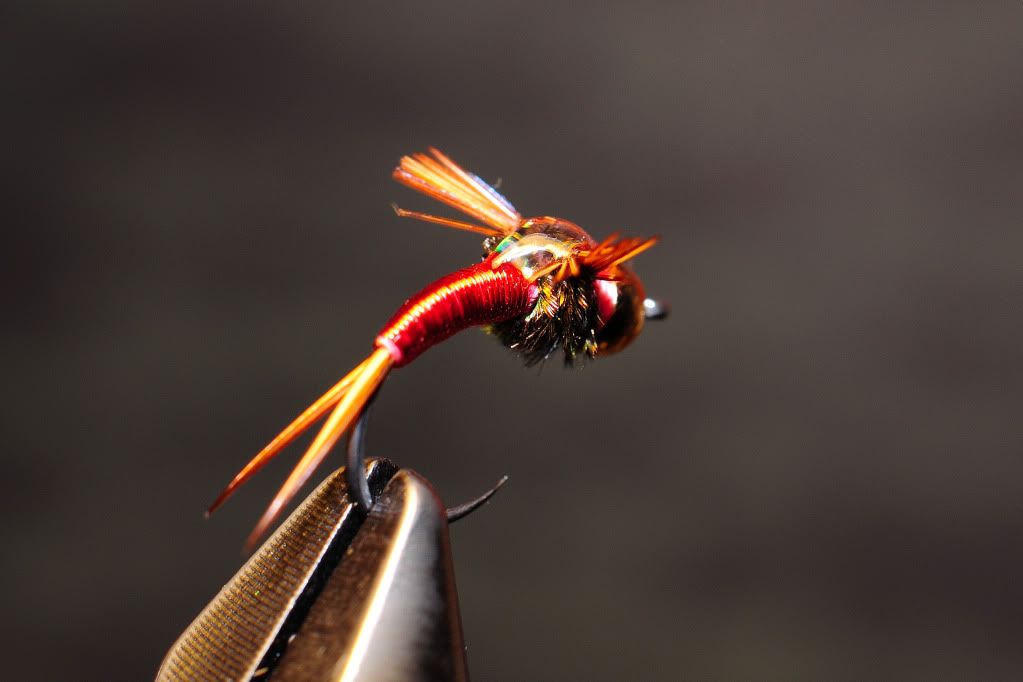
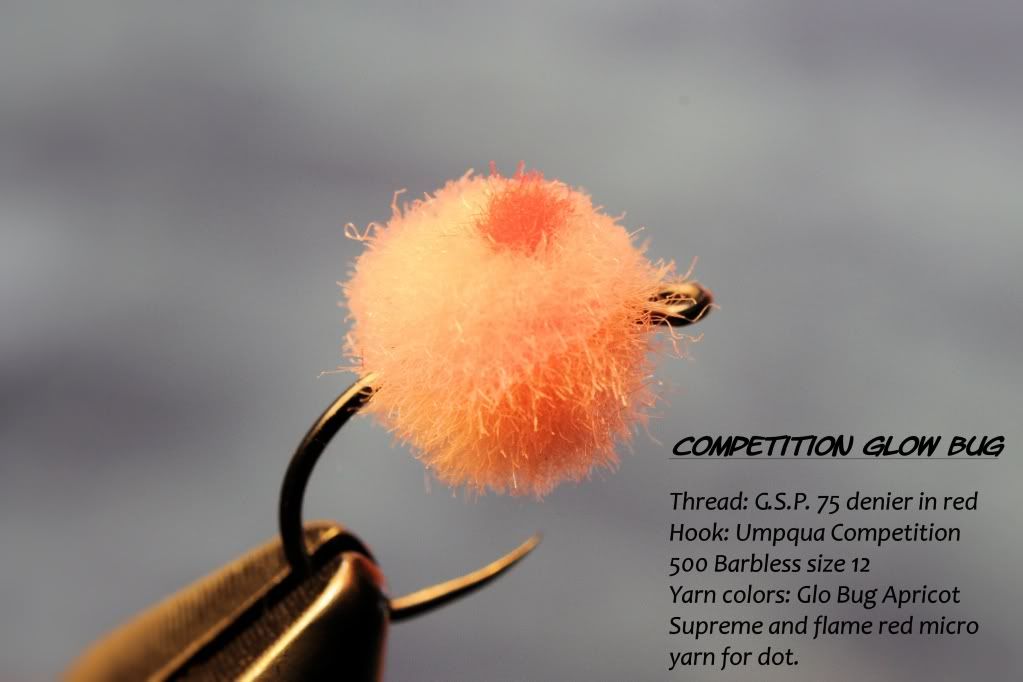
The next thing on the list would be either a vest (starting at $40), or a chest or waist pack (starting at $60) to keep all your stuff in. And now is when I tell you about the stuff. All the little things that you will be in constant need of that fill your vest or pack. These things include a pair of pliers or hemostats ($10), clippers ($8), strike indicators ($1 a piece), split shot ($4), A fly box ($15), leaders ($5 each), tippet ($5 for a 30 meter spool), and flies to put in your box ($1-$2 a piece). Here is a link of
My Top Ten Flies For Colorado! Here is the list of other things you will need to get started...
My compiled list :
1) A good all around 9' 5wt. fly rod
2) A reel a.k.a. line holder
3) Fly line which often comes discounted when sold with a rod and reel combo
4) A pair of waders and wading boots
5) A good pair of polarized sunglasses (important!)
6) A vest or pack to store gear in
7) Leaders
8) Tippet
9) Flies
10) Fly box
11) Hemostats
12) Clippers
13) Strike indicators
14) Split shot
I hope this helps you get started on what will be the most rewarding fishing experience of your life.
If you have more questions, or would like to find out my rates and availability for guided fly fishing trips, email me at
jonkleisflyfishing@yahoo.com
Please subsribe to my blog
http://www.coloradoflyfisher.blogspot.com/ by clicking the join this site button on the side of the page.
Tight lines and screaming reels!