Was doing a bug check at Bear Creek today. We were mostly doing this with the intention of tuning in our camera settings for taking bug shots on local tailwaters for our book. I've been doing bug kicks for some time, and while I've never pretended to be an entomologist, I'd like to think I have our tailwaters pretty dialed in. Small streams, however, are a different beast, and today we dredged up this worm that looked like it was straight out of that "monsters inside me" tv show. The video was shot at 60 fps, which ended up being the perfect speed because it accurately captured how quickly this worm was whipping around in real life.
A question I get often from clients during guide trips is, can I drink the water? My honest answer is yes, but if you knew what was swimming around in there, would you want to? And this just reaffirms that...
Basically, we would like to know more about this. If any of you can answer the simple questions like, is this non-native? is it parasitic? have you ever seen these in other rivers in Colorado? are these potentially in our drinking water? does this thing give you the heebee jeebees? etc... We would love to hear from you!
Also, just a heads up that the parts in the video where it looks like part of the worm disappears are from reflections coming off the surface of the water in the dish we were using.
Gazette Article - How To Properly Handle Trout!

Showing posts with label Entomology. Show all posts
Showing posts with label Entomology. Show all posts
Wednesday, July 2, 2014

Saturday, July 13, 2013
Dream Stream July Bugs - Trico Duns
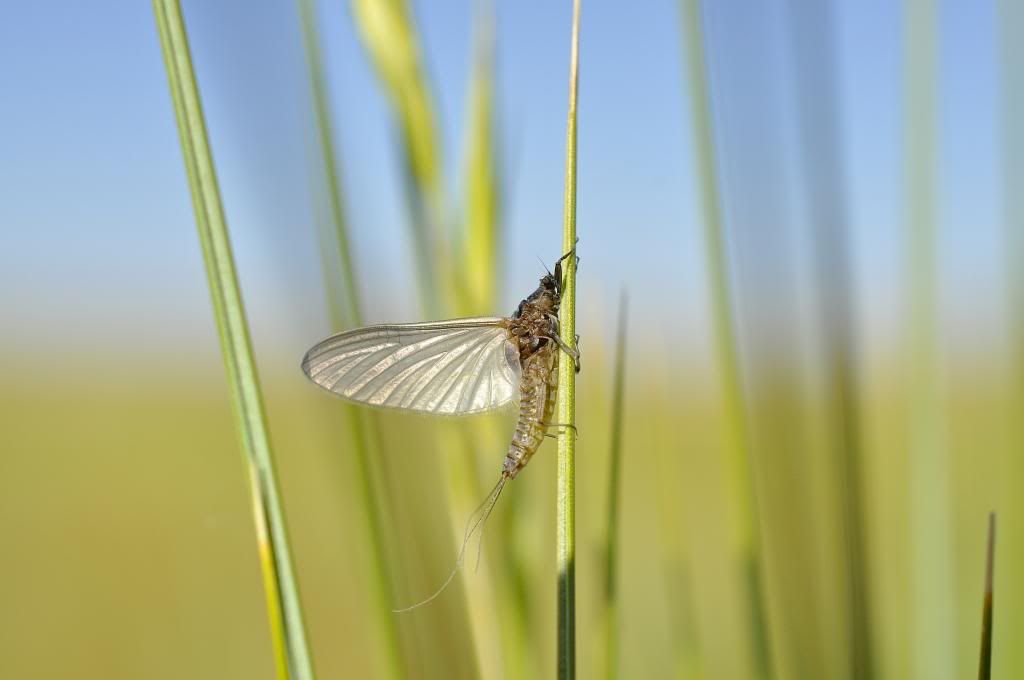 |
| Freshly hatched Trico dun photo by Kristen. Click to Enlarge |
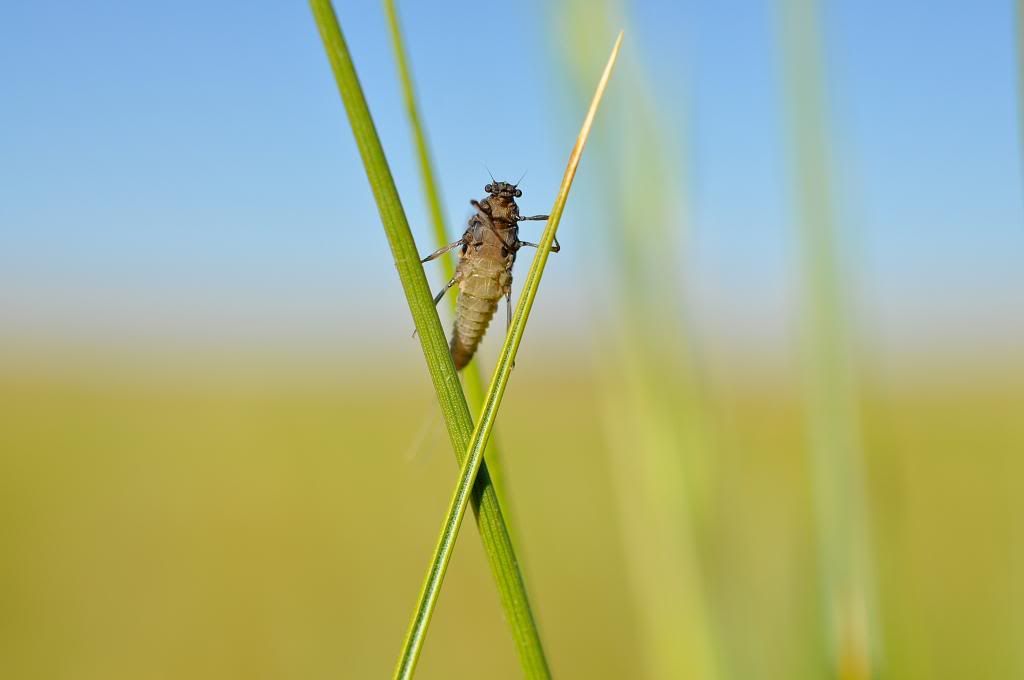 |
| What the fish see when duns are on the water -minus the blades of grass. Photo by Kristen |
Thursday, July 11, 2013
Wednesday, July 10, 2013
Dream Stream July Bugs - Beetle
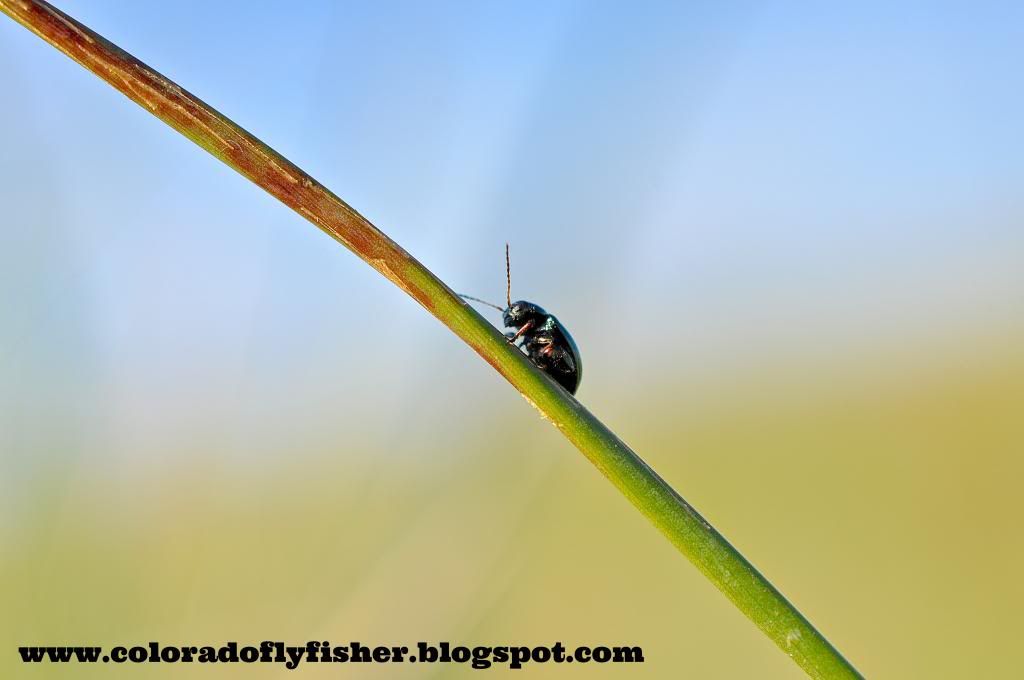 |
| This might be the cutest little beetle I've ever seen... Photo by Kristen |
Tuesday, July 9, 2013
Dream Stream July Bugs - Shucking Trico
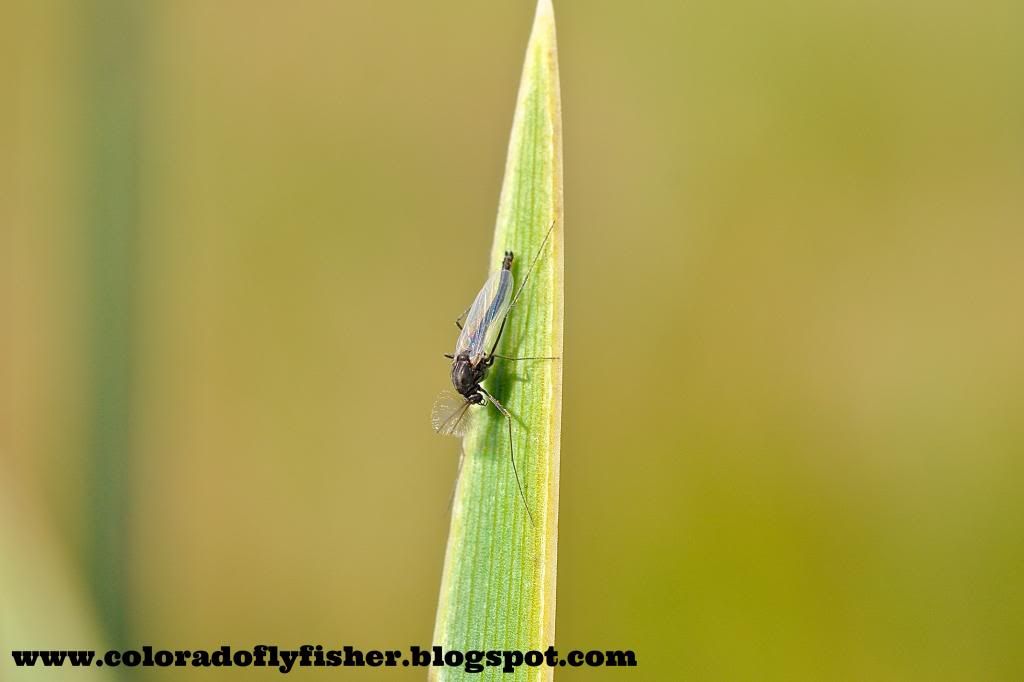
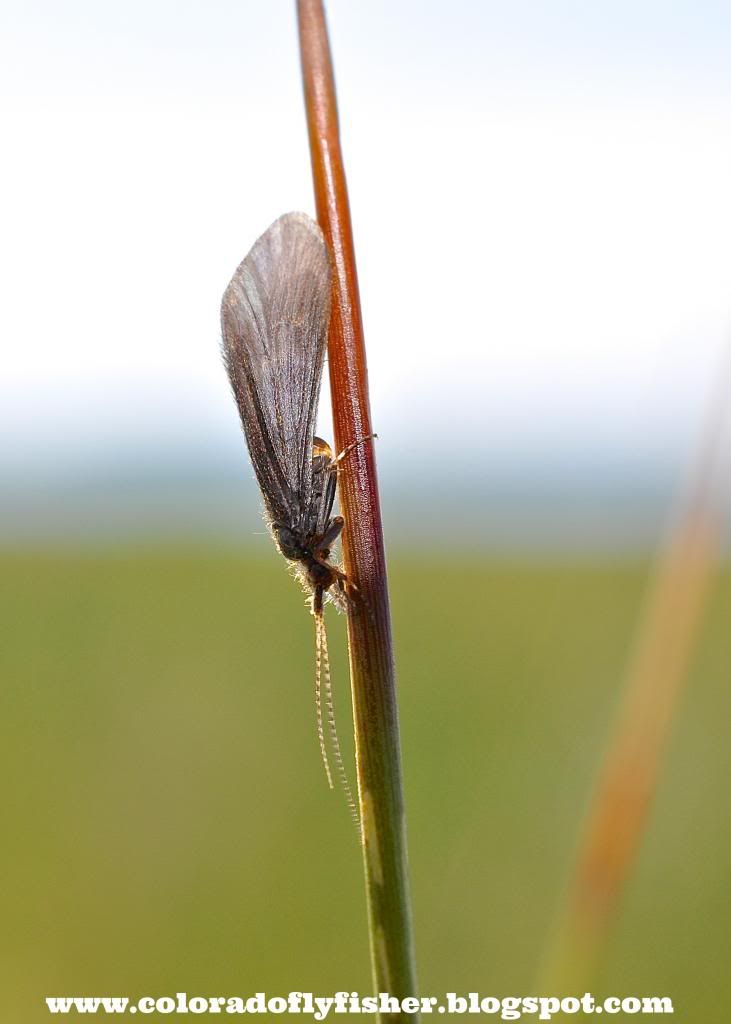
Today was a "hook up with a few fish and struggle because of fluctuating flows" kind of day on the Dream Stream, but we still made the best of it. My favorite part was when I looked over while I was fishing to see Kristen laying on her stomach in the grass with the macro lens on the DSLR taking bug photos. Cuter still was when Bree saw this as an opportunity to use Kristen as a bench to sit on while mama was shooting. We got the photos home, and considering that Kristen hasn't had a whole lot of experience shooting macro she got some really cool stuff.
So for the next couple of days we will be posting her work in the morning before we head out to harass fish. Today we will start with a few photos she managed to get of a trico mayfly molting. There are only three because I have a suspicion Bree was making life a little harder at the moment. Toddlers have a tendency to do that... Check it out!
So for the next couple of days we will be posting her work in the morning before we head out to harass fish. Today we will start with a few photos she managed to get of a trico mayfly molting. There are only three because I have a suspicion Bree was making life a little harder at the moment. Toddlers have a tendency to do that... Check it out!
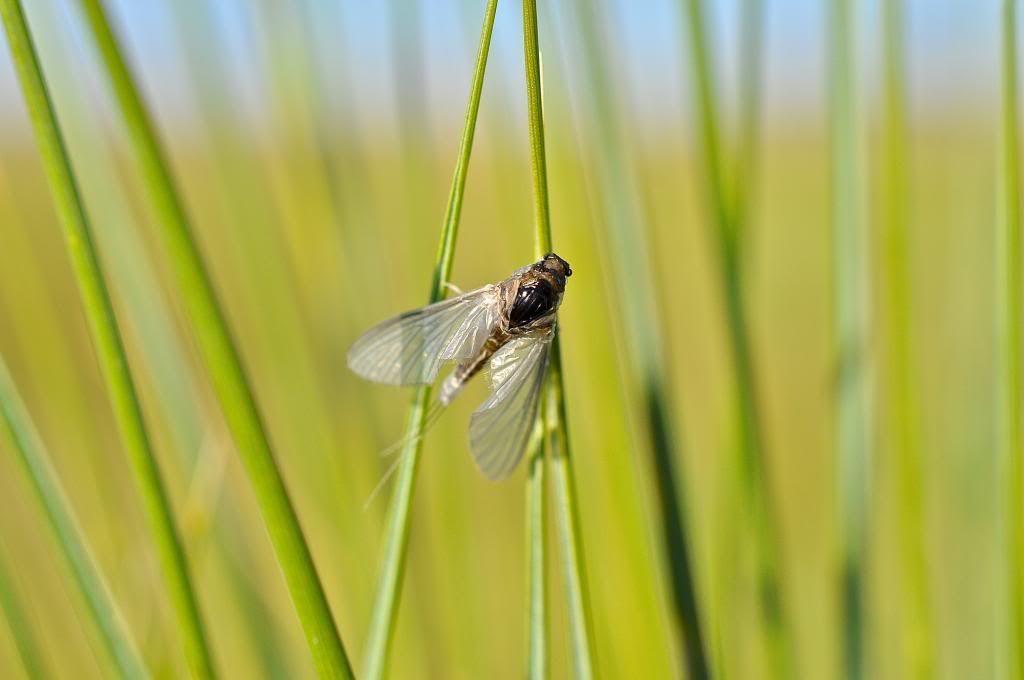 |
| In this photo you can see the empty shuck at the base of it's tail as it pulls free, and the shuck tearing over it's back. Also notice that the wings had already broken through. |
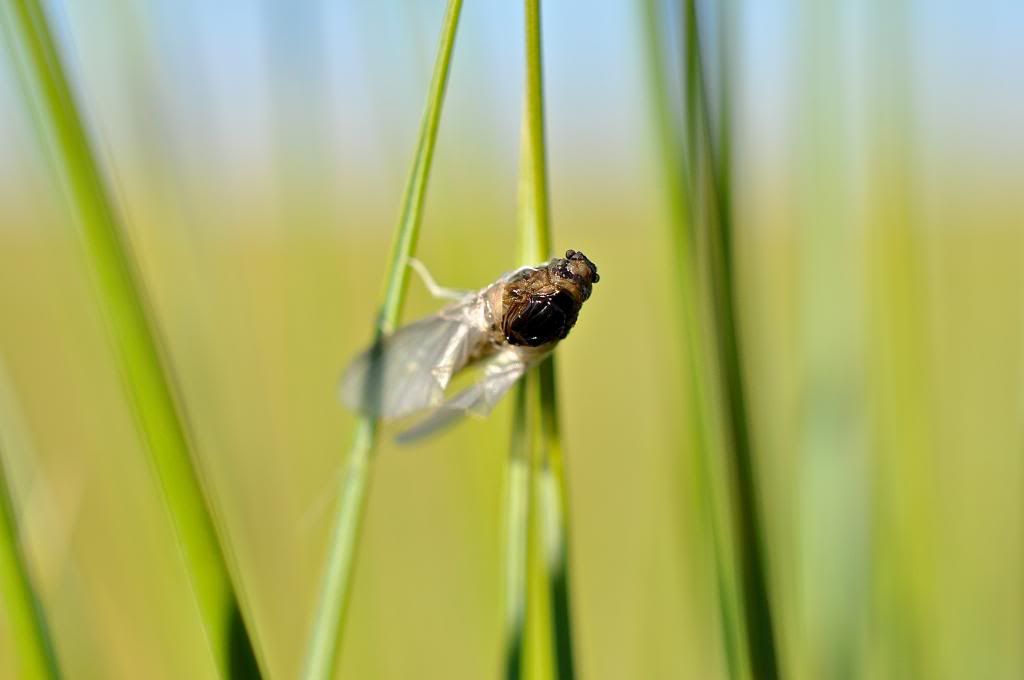 |
| It's soft wings are pulling through as it continues breaking free. |
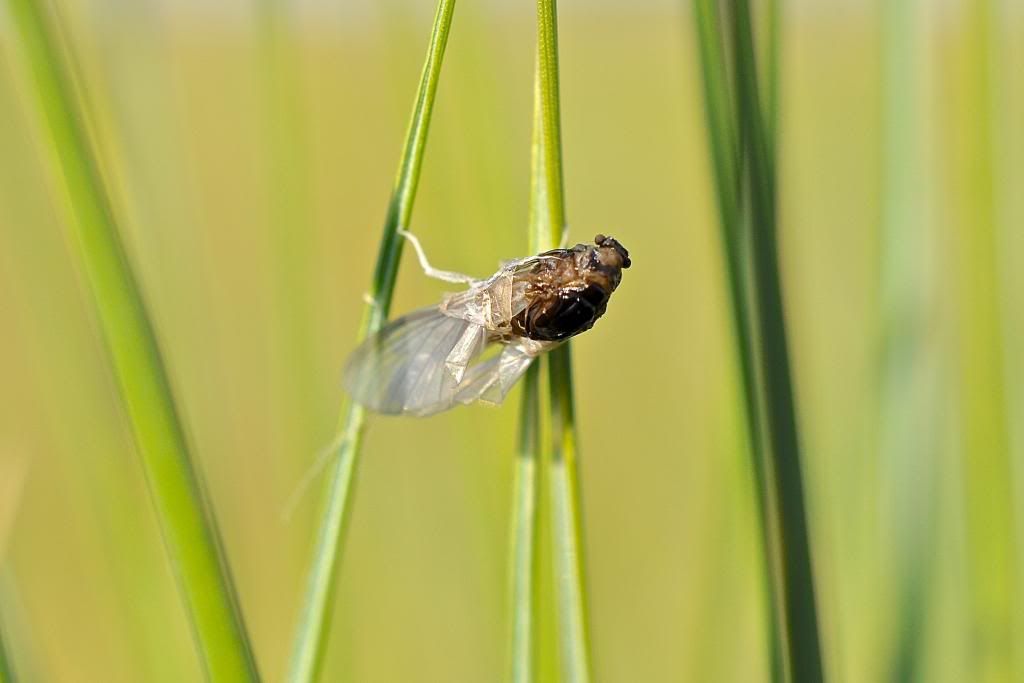 |
| Again getting closer as you can see the base of the wing has pulled through the shuck. |
Saturday, March 23, 2013
Short Clip Of A Stonefly Nymph
Working the kinks out but will be including some pretty up close and sweet footage of fish food in action!
Monday, March 11, 2013
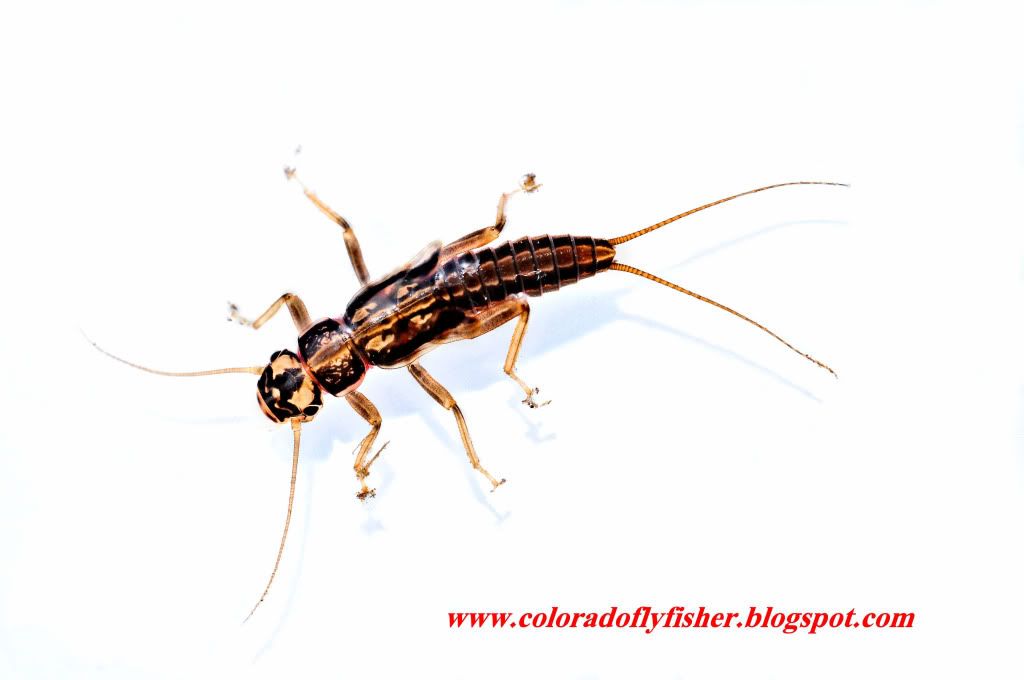
Recent Macro shots of a Stonefly Nymph
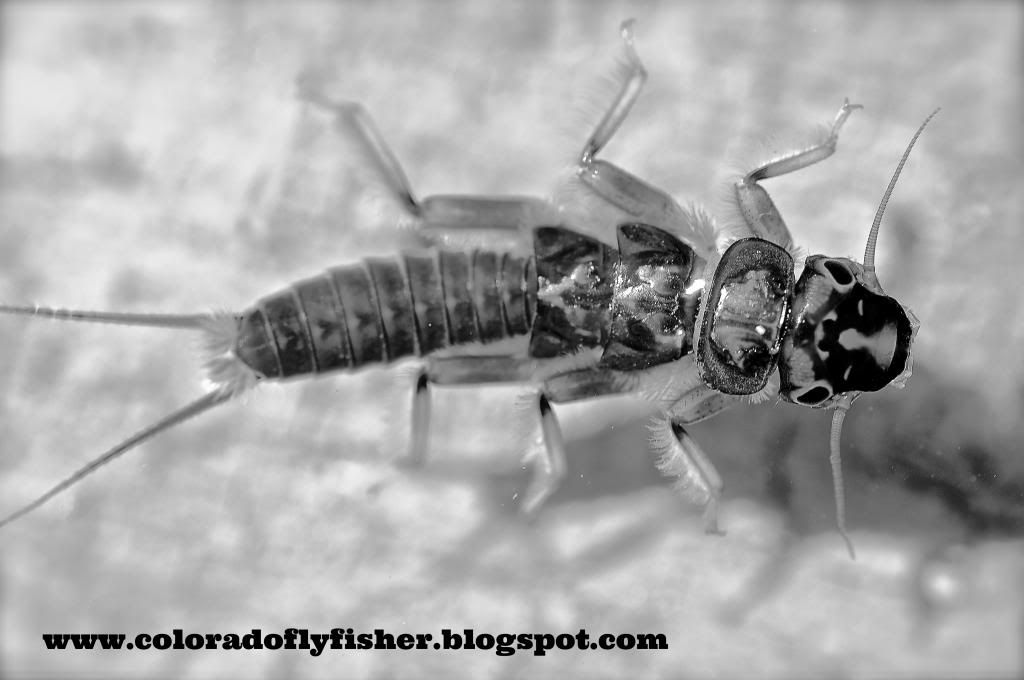
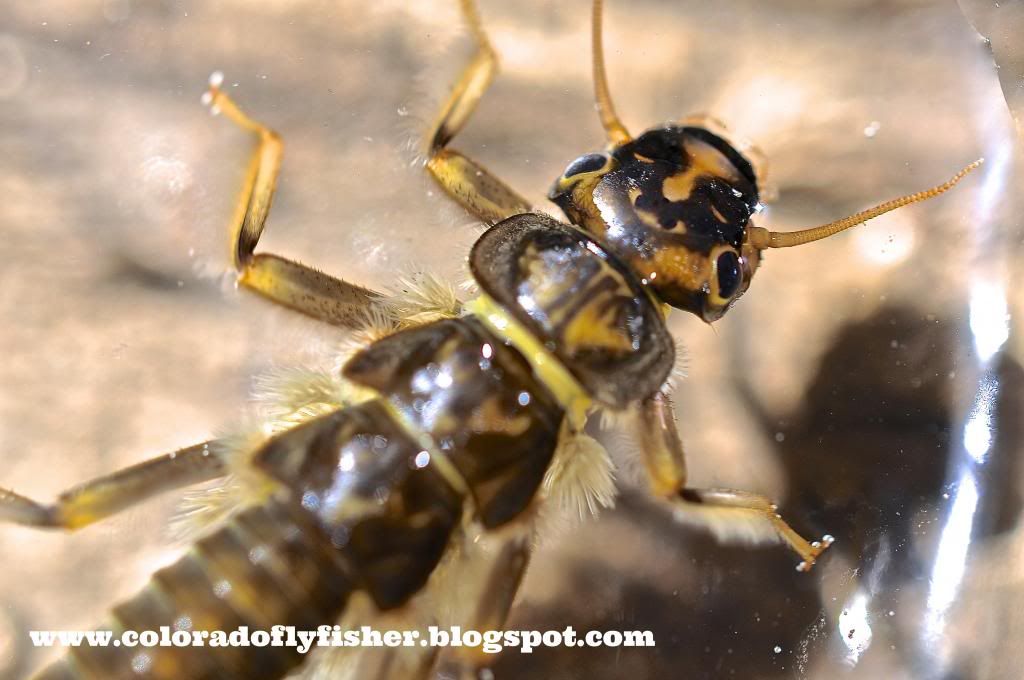
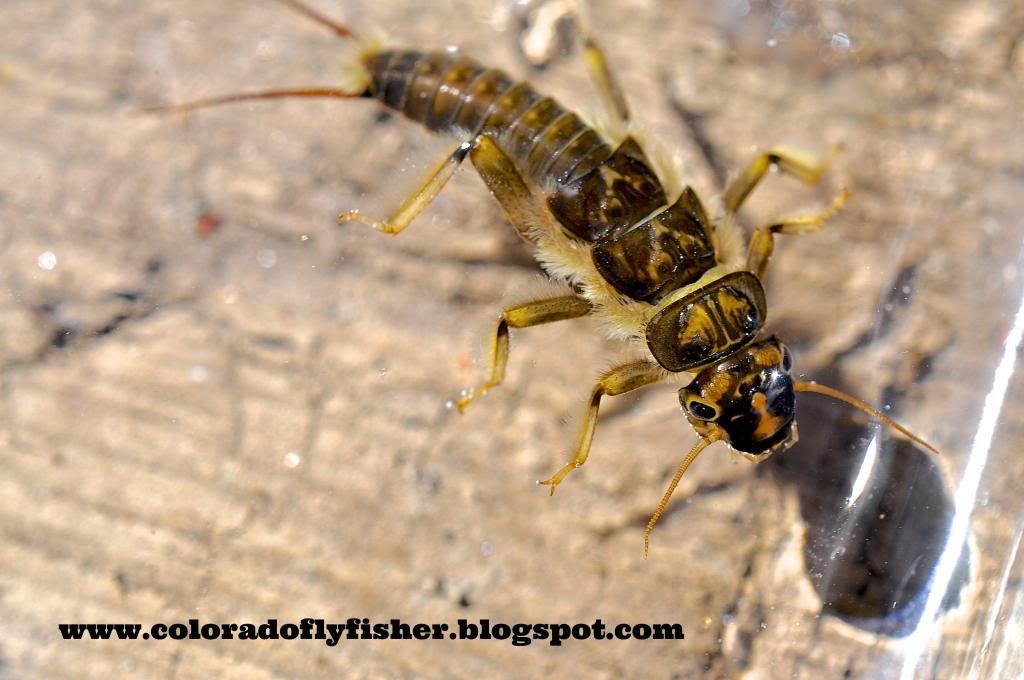
For more photos like these Like us on Facebook and subscribe to our site! For rates and availability for a guided adventure on the South Platte or Arkansas rivers send me an email to jonkleisflyfishing@yahoo.com
Monday, January 21, 2013
A Look At Insects Found In Fountain Creek Post Waldo Canyon Fire 01-21-2013
I got bored today and decided to get out and enjoy this amazing weather. Out of curiosity I decided to pay a visit to the stretch of Fountain Creek above Manitou between the edge of town and Rainbow Falls to do a bug kick. I did several kicks there last year starting around March to see what insects I could find after the stream improvements. A list of what I found in late March through April 2012: Baetis nymphs, Midge larvae, Caddis Larvae, Annelids (worms), Crane fly larvae, and Stonefly nymphs.
Today's visit was to see what insects inhabit the creek on a warm day in late January after the Waldo Canyon Fire. From what I understand there was plenty of run-off that washed into Fountain Creek after the fire - though I didn't see any physical signs. For example the Springer Fire in Elevenmile Canyon left the bank on the Springer Campground side colored black with soot. Noticeably missing from today's kick list so far are Midges, Caddis, and both large and small Stoneflies. How much of that has to do with it still being early in the year, or if those insects are missing because of the actual water quality, remains to be determined. When I do kicks like this I check multiple spots including under rocks, next to the bank, under fallen branches, and in any vegetation I find so all the bases are covered. I'll keep you guys posted on my findings when I do another kick in late March. Photos of the insects I found today...
Today's visit was to see what insects inhabit the creek on a warm day in late January after the Waldo Canyon Fire. From what I understand there was plenty of run-off that washed into Fountain Creek after the fire - though I didn't see any physical signs. For example the Springer Fire in Elevenmile Canyon left the bank on the Springer Campground side colored black with soot. Noticeably missing from today's kick list so far are Midges, Caddis, and both large and small Stoneflies. How much of that has to do with it still being early in the year, or if those insects are missing because of the actual water quality, remains to be determined. When I do kicks like this I check multiple spots including under rocks, next to the bank, under fallen branches, and in any vegetation I find so all the bases are covered. I'll keep you guys posted on my findings when I do another kick in late March. Photos of the insects I found today...
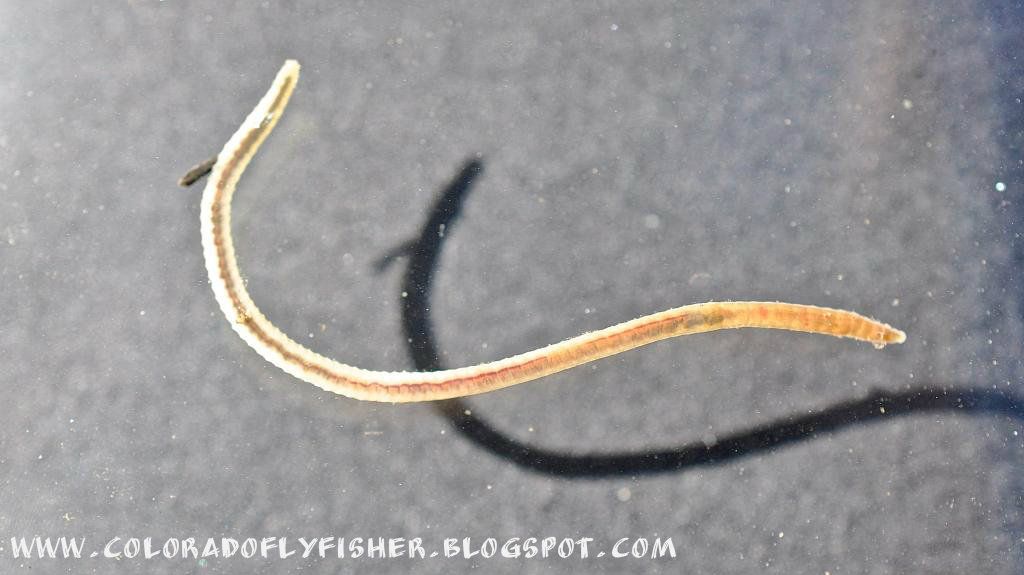 |
| Annelids |
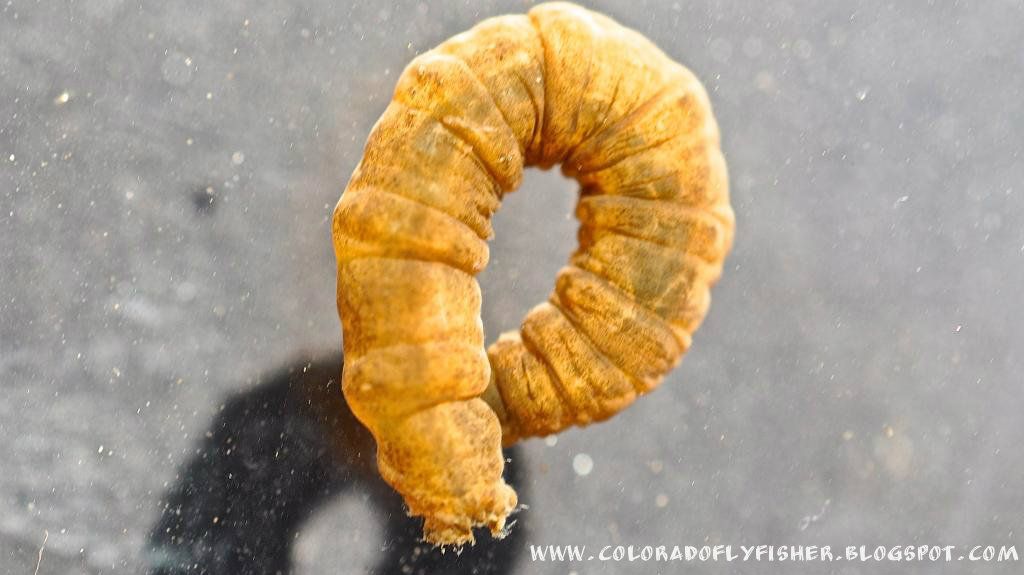 |
| Crane Fly Larvae |
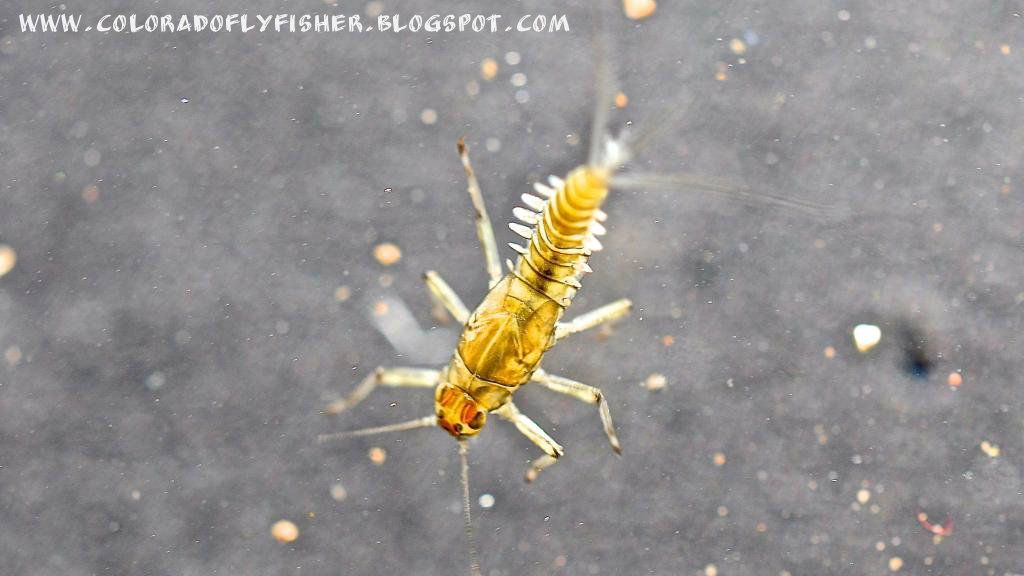 |
| Small Baetis Nymphs |
Thursday, September 6, 2012
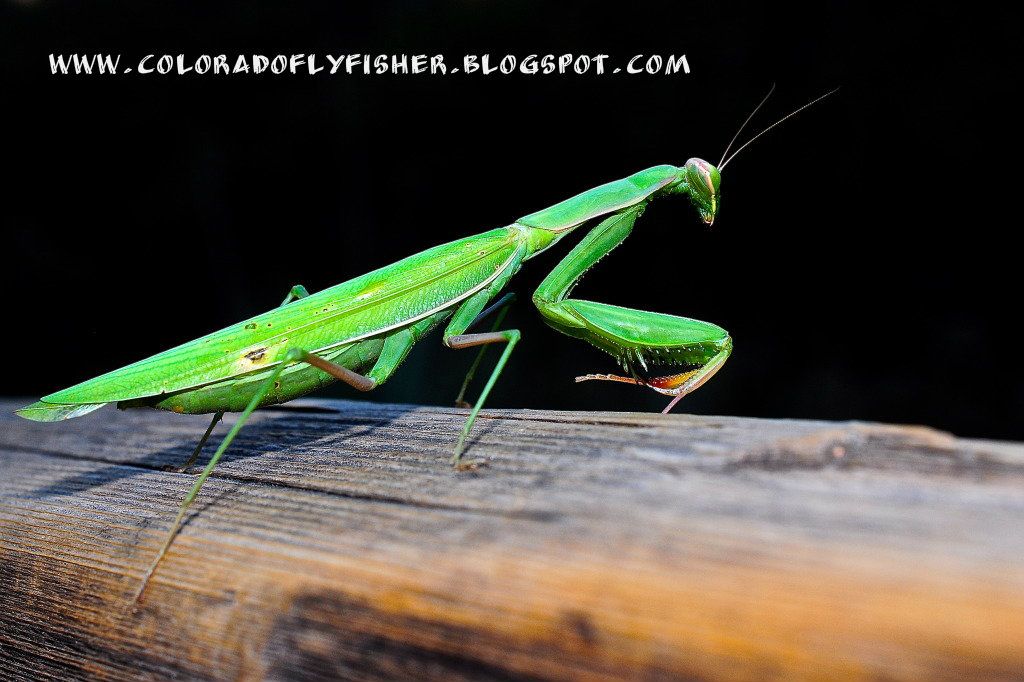
The Praying Mantis Hatch...
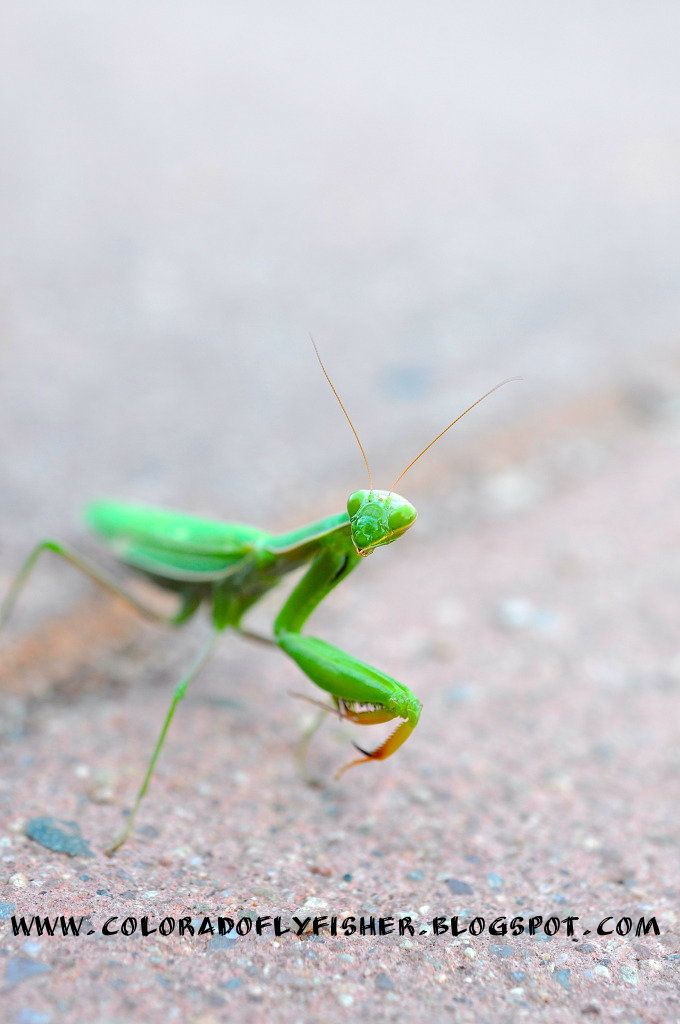
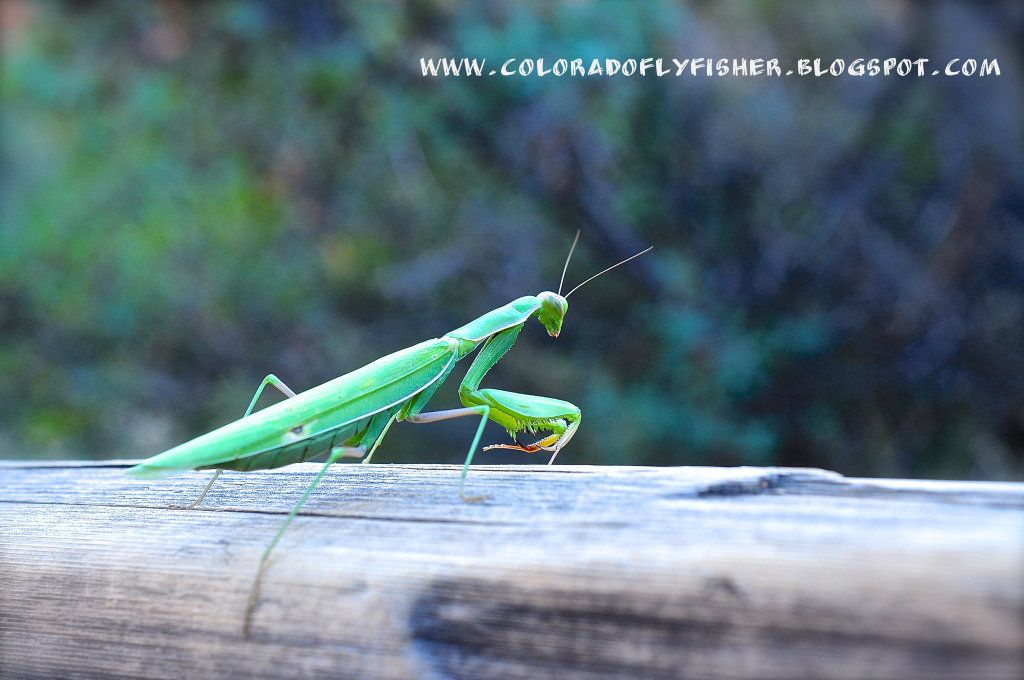
Check out this Praying Mantis Kristen found during our afternoon hike through Garden Of The Gods. It was massive and probably the biggest bug I've ever seen in real life, and that includes peoples pet tarantulas. It was at least 3 inches long! I honestly had no clue that Colorado grew them that big so we felt super blessed that we got to check it out and take some photos.
When we got home Kristen got on the computer and did a little research, and we think that this is a female European Mantid. We think it's a female based on the info we found that said females are usually larger with more girth. We also learned that large Praying Mantis are capable of catching and eating Humminbirds! They also have been known from time to time to decapitate and eat the smaller male Mantis during mating...
The one we spotted on our hike seemed very passive but definitely moved with a chilling purpose when it decided it had enough of us flashing it with the camera, and thankfully Kristen decided to bring our camera so we can share the experience. I tell a lot of potentially unbelievable nature stories so it's nice to finally have a camera available to capture evidence. Granted this isn't really flyfishing related, but you never know a big Mantis might be confused for a mutant grasshopper in one of our local lakes or streams and get munched. I bet it's happened! Either way I think most of us as anglers find bugs interesting and this is one big bug!


Monday, April 30, 2012

Sunday, April 29, 2012
Saturday, April 28, 2012
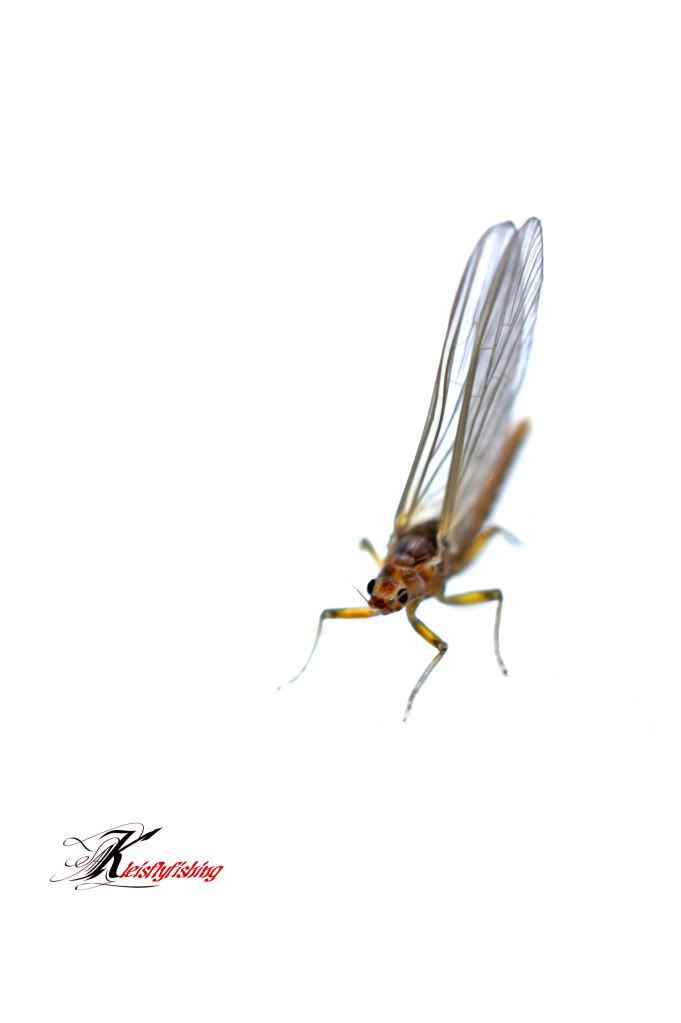
Adult Baetis Macro Shot
Check out my recent photo of an adult Baetis! I am really starting to figure out my new editing software. Sky's the limit now I just need to keep taking it to another level with my Nikon D90.
 |
| click to enlarge |
Saturday, March 17, 2012
Photo of A Blue Quill Nymph And Annelid Worm
Here is another photo I took in the same shoot as the Skwala of what I believe to be a Blue Quill nymph and a Annelid.
 |
| Click to enlarge |
Friday, March 16, 2012
High Res Photo Of A Skwala Stonefly
I went out and put my new light box to the test and took some pretty sweet photos of the various spring bugs that trout eat. Here is a photo of a Skwala Stonefly that was about a size 14. Based on what I was seeing in the stream I now understand why size 14-22 pheasant tail nymphs would fool fish. Other than Skwala Stoneflies I was finding a ton of Baetis size's 18-22. Check it out!
 |
| Click to enlarge |
For more please subscribe! For guided trips or questions concerning flyfishing or tying email me at jonkleisflyfishing@yahoo.com. Tight Lines!
Friday, August 12, 2011
Kleis's Back To Basics "Bug Parts - The Adult Mayfly"
Ive decided to write several short articles aimed at helping people that are new to the sport better understand what everyone else is talking about. There is so much hidden meaning behind what anglers say amongst each other and in the shop, as well as more acronyms than I think even the most experienced angler could remember in a lifetime so this is my attempt to help people just getting into the sport get caught up to speed.
This segment called "Bug Parts" is for new tyers. When tying flies you hear people referring to what materials they used for the various parts of the bug they are tying. For instance, "I used black fine and dry dubbing for the Trico's thorax". For the second year tyer that might make perfect sense but for the rest of the human population what does that mean?
Photo and fly by Jon Kleis
 Mayflies in both their nymph and adult stage's are divided into several different parts. We will start with the adult mayfly. The first and most obvious part is the tail which is followed by the abdomen. The abdomen on the fly pictured is tied with black thread and a crystal flash overbody that is wrapped forward (wrapping a material forward is sometimes refered to as palmering or palmered) around the hook shank. The second obvious part of this imitation of an adult Trico is the wing which in this case is tied with white Antron yarn and is laid out on either side and imitates a spent spinner. The thorax is just behind the head of the fly where the wing connects and is the thickest part of the bug and is tied with thread for this example. And of course the head of the fly is where you finished your bug and tied off your thread using a whip finish knot.
This next photo is of a natural Trico spent spinner. Adult mayflies become "spinners" when they mate and lay their eggs. The mating ritual is towards the end of the mayflies life cycle. After they lay their eggs they fall to the water from exhaustion in what we refer to as the "Spinner Fall" and then die. The aerial dance combined with how the bugs look as they fall to the water to deposit eggs and die is how this stage of the hatch was named. If a fly is tied like the one I made in the above photo with the wings splayed out to the sides it is refered to as a spinner.
 Here is another example of a spinner. Can you correctly identify the parts of this bug and what materials were used to tie each part?
Before Mayflies become spinners they emerge to become Duns which is the first adult stage of the bug after it has emerged and is free of its nymphal shuck. The Dun trico has a short tail and tends to be a light olive or tan color instead of black like you see on a spinner, even though my favorite fly to fish all the way through the trico hatch from start to finish is the John Barr pattern called the Viz-a-dun and is black in color. Duns also have strong wings that stand mostly upright. The parts of the Dun as it pertains to tying are refered to using the same terminology as a spinner (tail, abdomen,wing, thorax). Just be aware that there are different colors and traits such as the upright wing that you are imitating while sitting at your vice tying duns.
The parachute adams is one of my favorite bugs to use when I know Baetis (also called the Blue Winged Olive, or B.W.O.) are emerging. Around March on the South Platte River you will see tiny blue gray Baetis hatching starting at mid day. Parachute flies are tied by anchoring your wing material (in this case white calf body hair) so thats it's facing up at a 90 degree angle. Your hackle which normally forms your dry fly's thorax is now being wrapped or palmered around the base of the upright wing to form a "parachute". What is great about tying parachutes to imitate duns is that they have the upright wing and they also sit low on the surface film like the naturals would right after they emerge.
If there is anything I want you guys to take away from this read it is to have a better understanding of the four major parts of an adult mayfly pattern and also a clear understanding of what a parachute fly looks like and its benefits. A really good book to purchase for tying mayflies is the late Shane Stalcup's book called "Mayflies Top To Bottom". Also Ed Engle has a great book out that will help you get started tying those really tiny bugs for these technical Colorado tailwaters called "Tying Small Flies". Both books are more advanced but still have helpful information for beginners. If you have enjoyed reading this post or my blog in general help keep it going by clicking the join this site button and subscribing!
To book me for a trip on the South Platte river shoot me an email at jonkleisflyfishing@yahoo.com
Thanks again and tight lines!
This segment called "Bug Parts" is for new tyers. When tying flies you hear people referring to what materials they used for the various parts of the bug they are tying. For instance, "I used black fine and dry dubbing for the Trico's thorax". For the second year tyer that might make perfect sense but for the rest of the human population what does that mean?
Photo and fly by Jon Kleis
 Mayflies in both their nymph and adult stage's are divided into several different parts. We will start with the adult mayfly. The first and most obvious part is the tail which is followed by the abdomen. The abdomen on the fly pictured is tied with black thread and a crystal flash overbody that is wrapped forward (wrapping a material forward is sometimes refered to as palmering or palmered) around the hook shank. The second obvious part of this imitation of an adult Trico is the wing which in this case is tied with white Antron yarn and is laid out on either side and imitates a spent spinner. The thorax is just behind the head of the fly where the wing connects and is the thickest part of the bug and is tied with thread for this example. And of course the head of the fly is where you finished your bug and tied off your thread using a whip finish knot.
 |
| Click on photo to enlarge for a better view |

Before Mayflies become spinners they emerge to become Duns which is the first adult stage of the bug after it has emerged and is free of its nymphal shuck. The Dun trico has a short tail and tends to be a light olive or tan color instead of black like you see on a spinner, even though my favorite fly to fish all the way through the trico hatch from start to finish is the John Barr pattern called the Viz-a-dun and is black in color. Duns also have strong wings that stand mostly upright. The parts of the Dun as it pertains to tying are refered to using the same terminology as a spinner (tail, abdomen,wing, thorax). Just be aware that there are different colors and traits such as the upright wing that you are imitating while sitting at your vice tying duns.

 |
| Click on photo for enlarged view of this Parachute Adams |
 |
| Barr's Viz-a-dun Trico. Notice the hackle is palmered around the hook to form the thorax? This is how it's done on most traditional dry flies tied with hackle. |
If there is anything I want you guys to take away from this read it is to have a better understanding of the four major parts of an adult mayfly pattern and also a clear understanding of what a parachute fly looks like and its benefits. A really good book to purchase for tying mayflies is the late Shane Stalcup's book called "Mayflies Top To Bottom". Also Ed Engle has a great book out that will help you get started tying those really tiny bugs for these technical Colorado tailwaters called "Tying Small Flies". Both books are more advanced but still have helpful information for beginners. If you have enjoyed reading this post or my blog in general help keep it going by clicking the join this site button and subscribing!
To book me for a trip on the South Platte river shoot me an email at jonkleisflyfishing@yahoo.com
Thanks again and tight lines!
Sunday, July 3, 2011
Short Video Of A Caddis I Took In 11mile Canyon For A Project Im Working On
To keep this coloradoflyfishing blog going subscribe by clicking the follow button link towards the top and on the right of this page!
To watch this video in full screen in HD click on this link.
http://www.vimeo.com/25920535
Subscribe to:
Posts (Atom)