Gazette Article - How To Properly Handle Trout!

Showing posts with label Flies. Show all posts

Wednesday, February 26, 2014

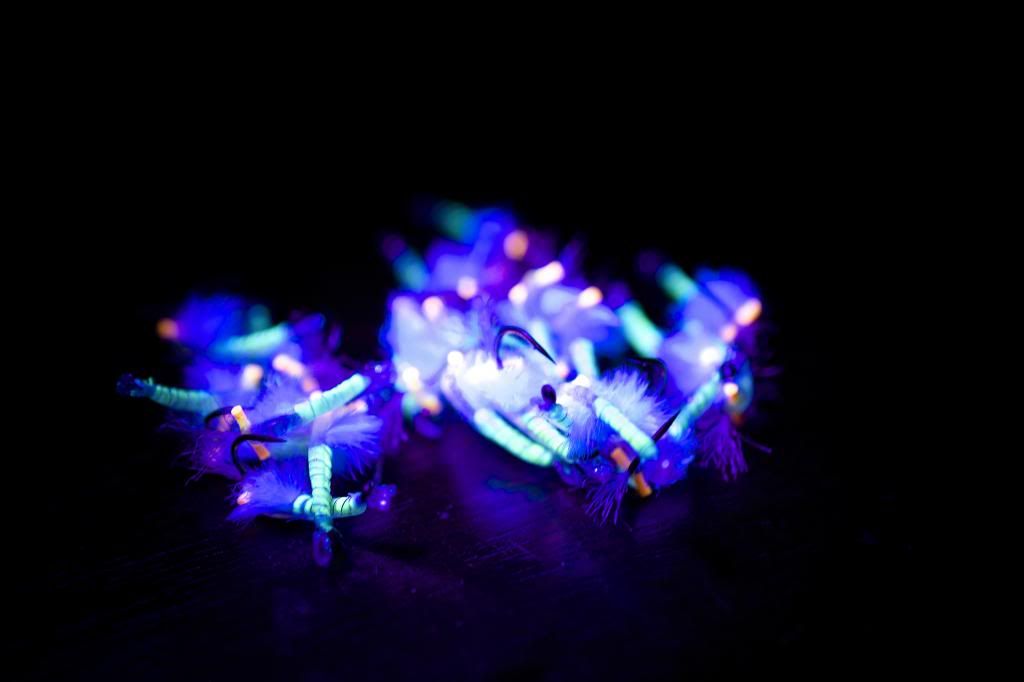
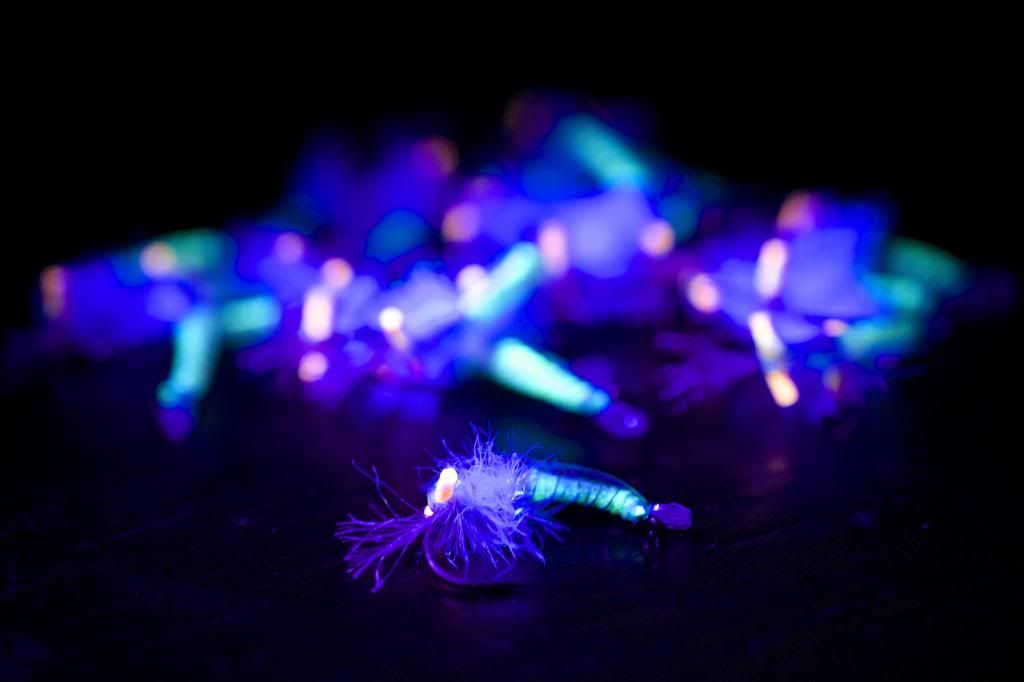
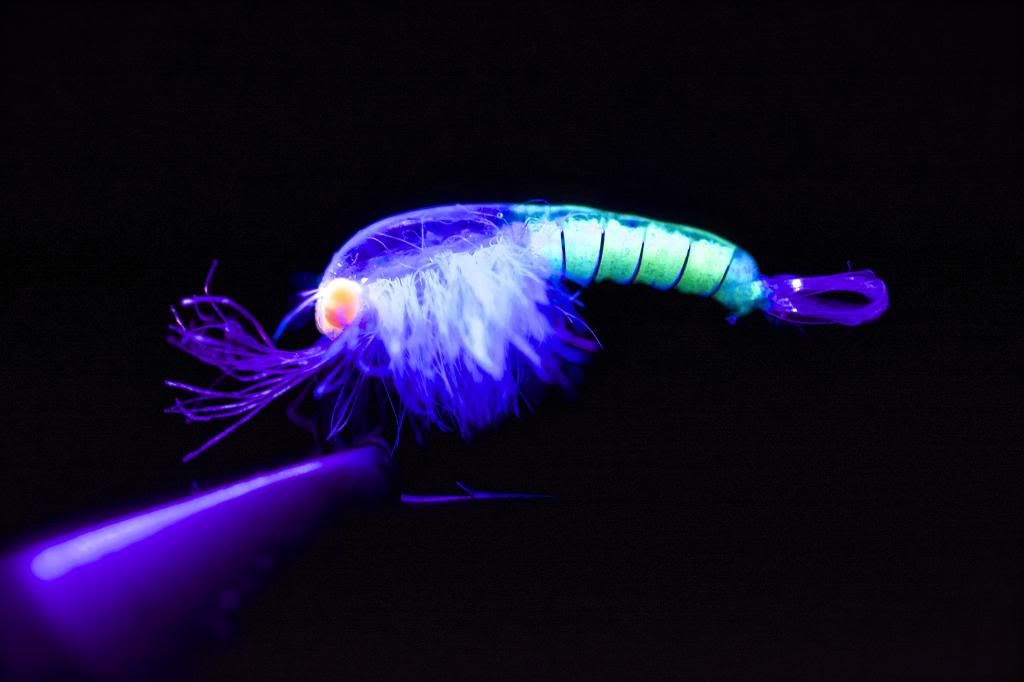
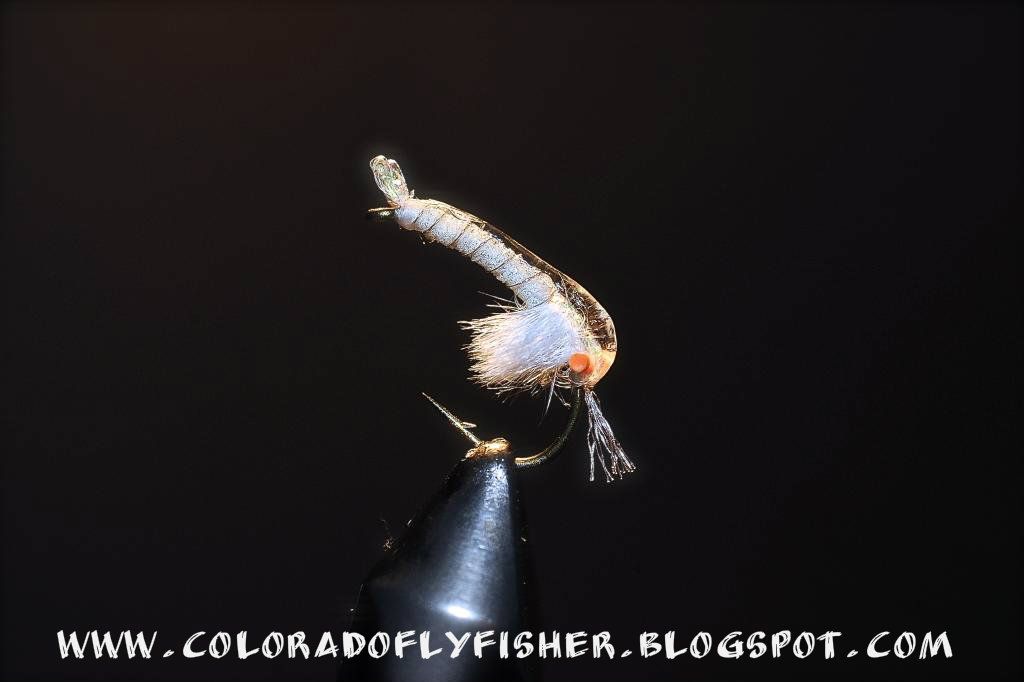
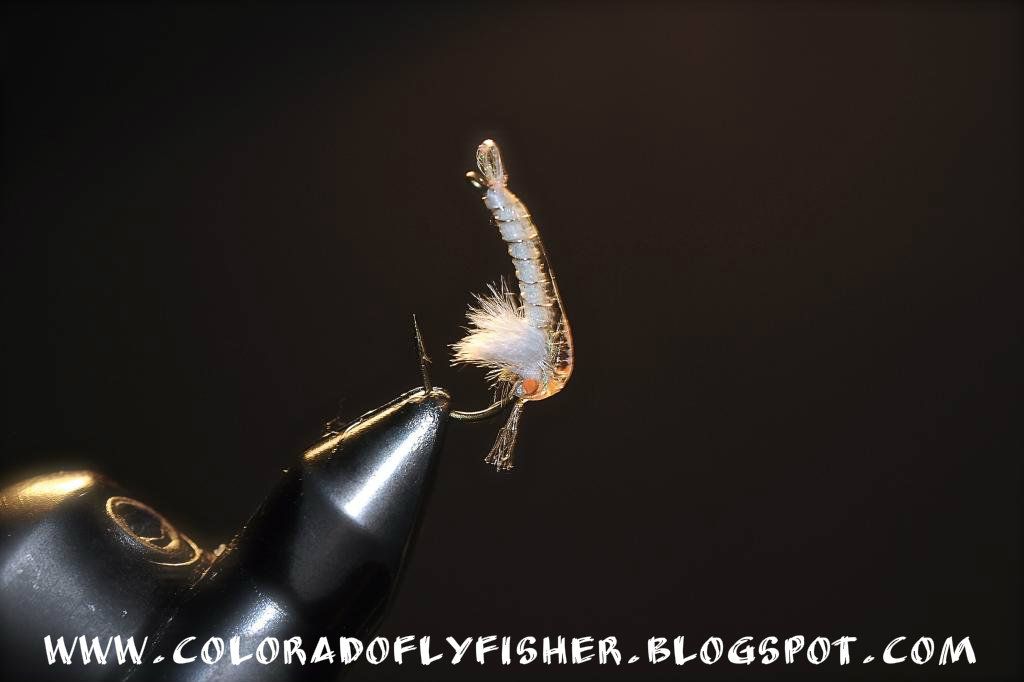
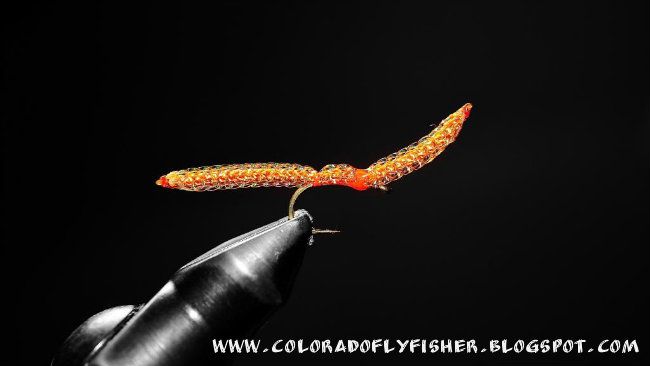
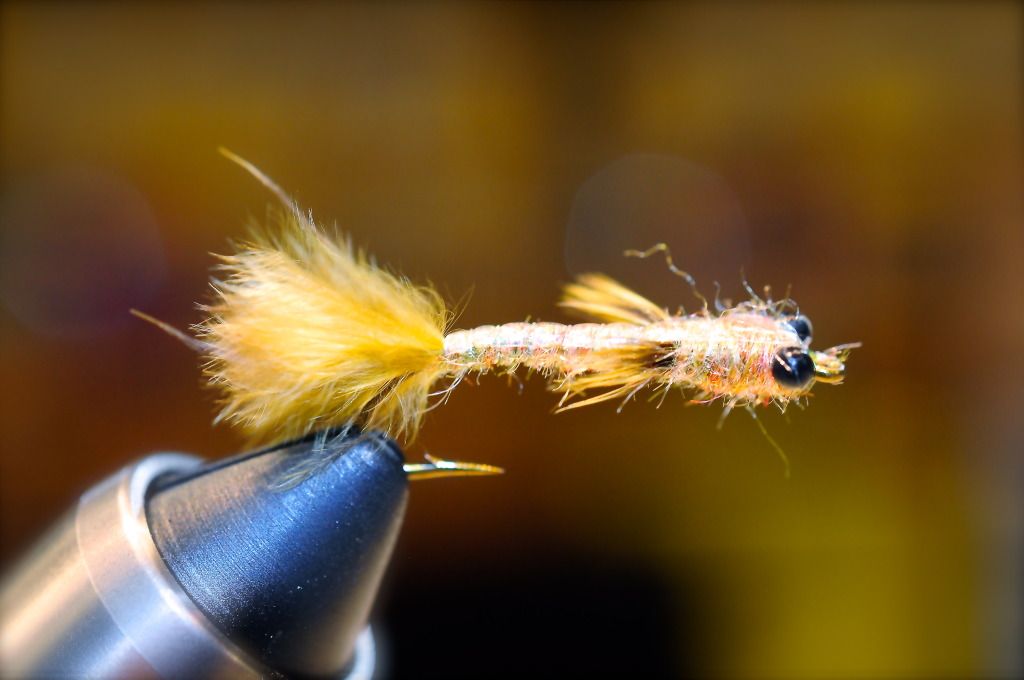
Photos Of Kleis's Mysis Glowing In The Dark

Yep, they glow in the dark. Bring your uv lamp and brighten up a trout's day, or night, on a tailwater near you!


For the complete recipe and tying video follow this link! If you like our website please show your support by subscribing and following us on Facebook. If you don't tie and would rather purchase Kleis's Mysis they are available. You can purchase them by sending your requests to jonkleisflyfishing@yahoo.com Cost is $3.00 per fly with a minimum order of a dozen. Sizes range from 14-10 in orange, black, red, and purple eyes. These are tied on high quality Tiemco hooks by me right here in Colorado Springs. Thanks for your support and tight Lines!

Wednesday, February 27, 2013

Mojo Midges and PMD Soft Hackles

This past week I finally got back into my tying groove. I always go into an involuntary hibernation for at least a month during the winter, and for a month during the peak of summer. This is a natural by-product of making a living doing something you're passionate about. Of course, I use the phrase "making a living" loosely. Either way, It's healthy to take a short break and let yourself get away from the stress long enough to remember why you play for a "living". Anybody who thinks being a guide is not hard work is sorely mistaken. End of short rant...

Moral to the story is that it's still fun to be a guide, and here are the photos to prove it...


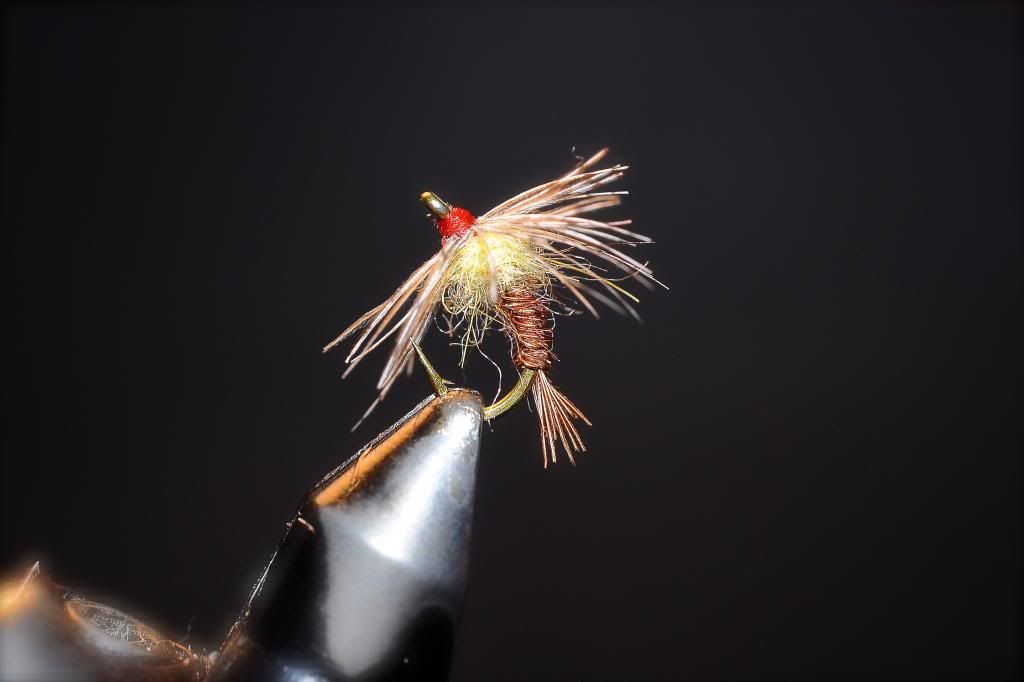
PMD Soft Hackle


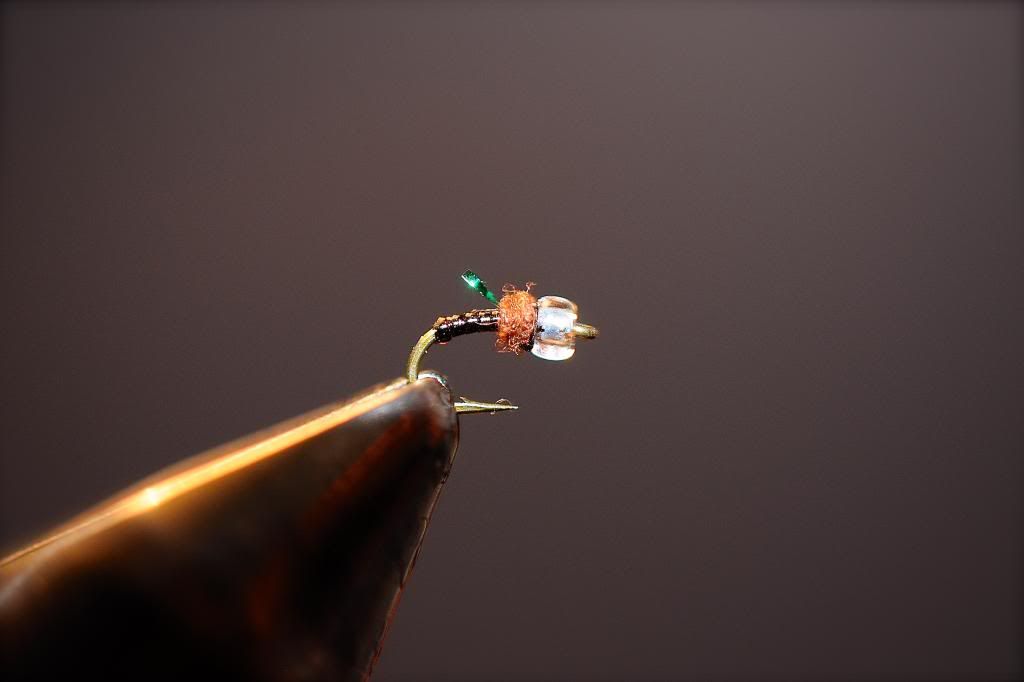
Kleis's Chocolate Mojo Midge

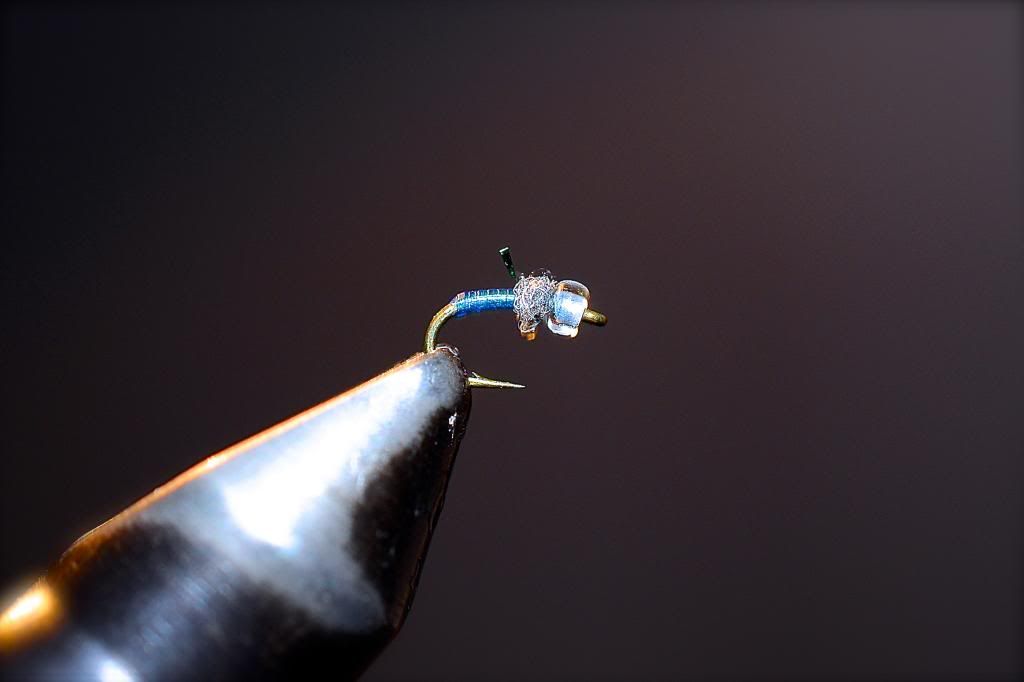
Kleis Mojo Midge in blue.


These are the bugs I've been tying! The bottom two might not be anything special to look at, but they are of a pattern I am extremely proud of, the Mojo Midge. It's about as durable as a size 22-24 midge gets, and hammers fish on our local tailwaters. The top photo is of a PMD Soft Hackle that I fish religiously as my first fly in a two fly rig during the summer. I take a great deal of pride in the fact that 95 percent of my fishing and guiding is done with flies that I have tied. Between a recent addiction to carp fishing, a love for stillwater fishing, doing special orders for customers, and all of the guiding and fishing I do, that is a ton of tying during the course of the year! If you want to help support me and my growing family, and contribute to my work load by ordering some of my flies -which I would greatly appreciate, then send me an email with your requests to jonkleisflyfishing@yahoo.com. Mojo Midges are also available in size 22 in brown, olive, chocolate, and black at Anglers Covey fly shop on the corner of highway 24 and 21st street. Thanks and tight lines!

Friday, January 4, 2013

How To Tie - Kleis's Mysis


First, a little background behind my inspiration for this fly. Let it be known that I'm not the first person to use Glow in the Dark Flashabou for a Mysis Shrimp pattern, nor will I be the last. I just got tired of it not being shared with the general public. This is a simple pattern to tie (under 5 minutes), and you would be hard pressed to find a more realistic representation of a dead Mysis shrimp than this. Kristen and I took Kleis's Mysis to the Taylor, and owned fish all day while other anglers watched. In fact, that day on the Taylor was the first time Kristen landed a fish there, and she didn't stop at one.

Every sample I've collected of Mysis over the years has that paddle shaped looking tail called a Statocyst. This "tail" is something I rarely see represented in Mysis patterns, which surprises me because of how much emphasis is put on profile in fly-tying. Another trait that you will see if you google "Mysis shrimp" and look at the images is the appearance of an orange spot on some dead shrimp. I've been told that the orange spot is the egg sack of the female, though I haven't done the research yet to confirm. This is my reason for using orange for the eyes. And since I started putting orange eyes on my shrimp imitations I have done nothing but kick butt with Mysis on both the Blue River below Dillon, and the Taylor Catch and Release. No, I haven't taken these to the Pan yet, so if anybody wants to "borrow" a few, or tie some up and take them there to see how they do please let me know.


Here is the complete recipe...


Kleis's Mysis

Hook: Tiemco 2487 sizes 10-14
Thread: 14/0 or 8/0 (white)
Eyes: Fine Round Rubber in either orange, black, red, pink, purple
Legs: Widow's Web (white)
Swimming Legs/"thorax": 3 strands Ostrich Herl (white)
Carapace/Flashback: Lagartun French Mini-FlatBraid
Abdomen: 2 strands of Glow in the Dark Flashabou
Rib: x-sm silver wire
Tail/Statocyst: Lagartun French Mini-FlatBraid
Shell back: Thick Clear Cure Goo covered in head cement.


If you appreciate this video and my posts be sure to subscribe to Colorado Flyfishing Magazine and like our facebook page. For all other questions, or to schedule the creator of this bug for a guided trip, send me an email to jonkleisflyfishing@yahoo.com

Tight lines!

Monday, December 10, 2012

The Pearl San Juan Worm


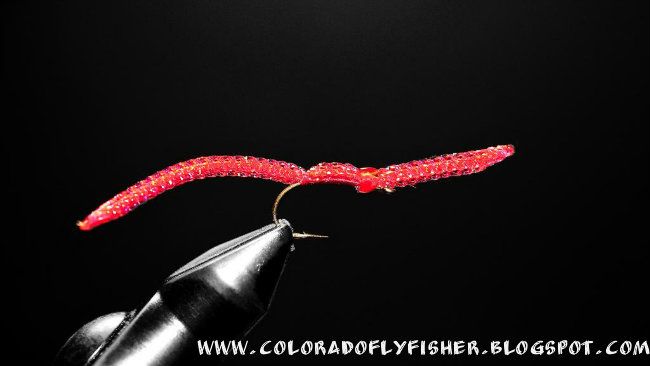
For the last week I have been working on my first ever worm box, and one of the synthetic materials I have been using in place of Standard Ultra Chenille to tie my San Juan Worms is a Hareline product called Pearl Core Braid. As it's name suggest it has a core that comes in a variety fish catching colors, and is surrounded by a clear pearl braided flash. Trust me when I tell you that the photos aren't doing the material justice, and that this worm pattern will shred lips!

In fact, I would be stunned if they didn't catch fish in the Pueblo tailwater during the coldest days of winter.  These would also do great on the South Platte tailwaters after a bump in flows or during runoff.  The "sex band" on the worm is a thread base covered in Clear Cure Goo and then coated with Sally Hansen's. Other than that it's tied just like a typical San Juan. I will say that there is a trick to melting and forming the ends of the Pearl Core Braid, and that it has to be done or the fly falls apart. If I get any interest in seeing how this is done I will gladly do a video to show off the technique.


The Pearl San Juan Worm

Hook: Your favorite Scud hook. I like the TMC 2488 in a size 14
Thread: Yes please...  Use a color that looks good for the band.
Worm material: Pearl Core Braid
Band: Thread covered in awesome Clear Cure Goo (CCG) and coated with Sally Hansen's


As fast as it took for you to read this recipe is about how fast an experienced tyer can spin one up. It's cake! Give 'em a try!

Thursday, August 30, 2012

Kleis's Fly Of The Week - Barr's Trico Vis-A-Dun

Click to enlarge


Barr's Trico Vis-A-Dun has been my go-to pattern anywhere there has been a Trico hatch since it came out.  Barr's pattern does a great job at imitating the dun stage of the Trico as it's name suggests, but will also catch fish all the way through the spinner fall.  I can't tell you how many days I've spent on the water fishing this hatch and never had to change flies.


Fish size 22 when you see Trico's starting to hatch around the end of July on the South Platte River, and on the Arkansas River below Pueblo Reservoir.  As it gets later in the year and the weather starts to get cooler down size to a size 24 Vis-A-Dun.  This is important for a couple of reasons.  First, if you fish in the same places I do then you know that there is a ton of fishing pressure and these educated fish start to snub larger offerings.  Second, the bugs actually start to get smaller in size as we get closer to October.  It's not unheard of for anglers to throw size 26 Trico imitations towards the end of the year.


One of the common mistakes I hear anglers make is that they assume because it is late September or even October that the bugs they are seeing are Blue Wing Olives.  Always remember guys and gals that Trico's hatch until we get that first real freeze in the high country.  If the freeze doesn't happen until two days before Halloween and you're fishing in the morning and seeing a cloud of insects overhead then the odds are pretty good you are witnessing a Trico hatch.  And because there are still midges and Blue Wings capable of hatching you could be smack dab in the middle of a multiple hatch.


The beauty of the Vis-A-Dun is that it can easily be mistaken for a midge.  A trick I learned from working with old timers in the shop that I truly believe has helped me fool more fish is to clip the tail to give your fly a smaller profile.  For instance, you know beyond the shadow of a doubt that the Trico hatch is done for the day but you still see fish coming up to midges.  Turn your Trico pattern into a midge by clipping the tail.


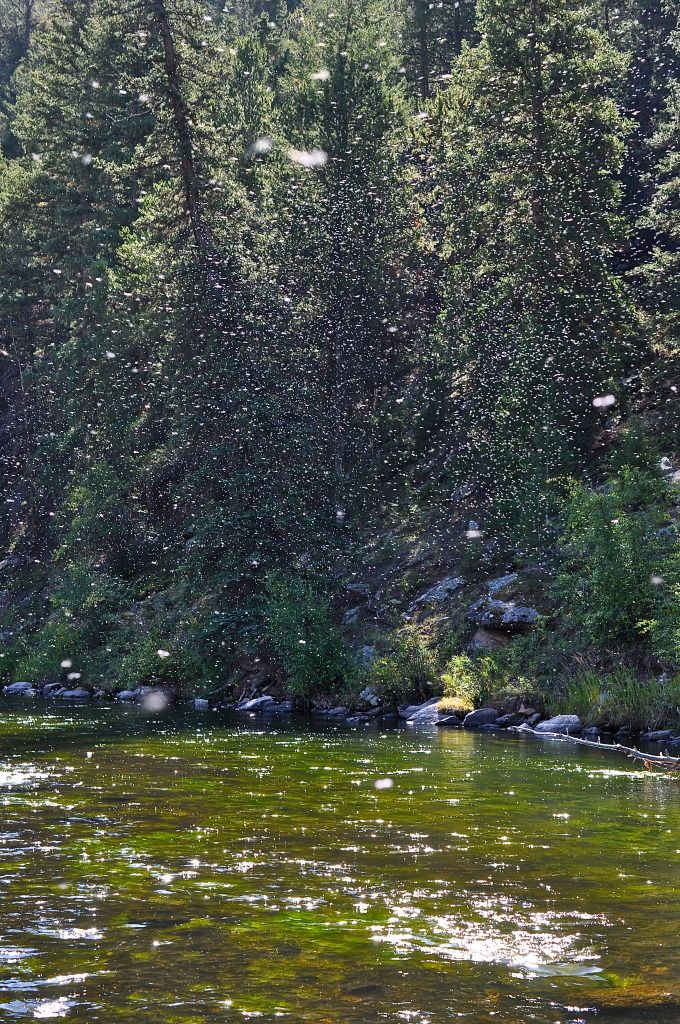
Photo of an epic Trico hatch in 11 Mile Canyon August 30, 2012

There is still plenty of time in the year to schedule a guided trip and have a chance to fish this insane hatch in beautiful 11 Mile Canyon on the South Platte River!  Just shoot me an email at jonkleisflyfishing@yahoo.com to check out my rates and availability!

Sunday, August 19, 2012

The Inventor Of The Elk Hair Caddis Passed Away

I received a post on Facebook from a friend sharing the sad news that yet another great tyer has passed away.  I say great even though I didn't know much about Al Troth, but anybody that creates a pattern as timeless as the Elk Hair Caddis has to be considered one of the greats.  You guys know I have a soft spot for remembering and giving credit to tyers that have invented flies that have literally taken over the industry and this is one of those times.  For an extremely well written article on Al Troth follow this link to the Bozeman Daily.

Tuesday, August 7, 2012

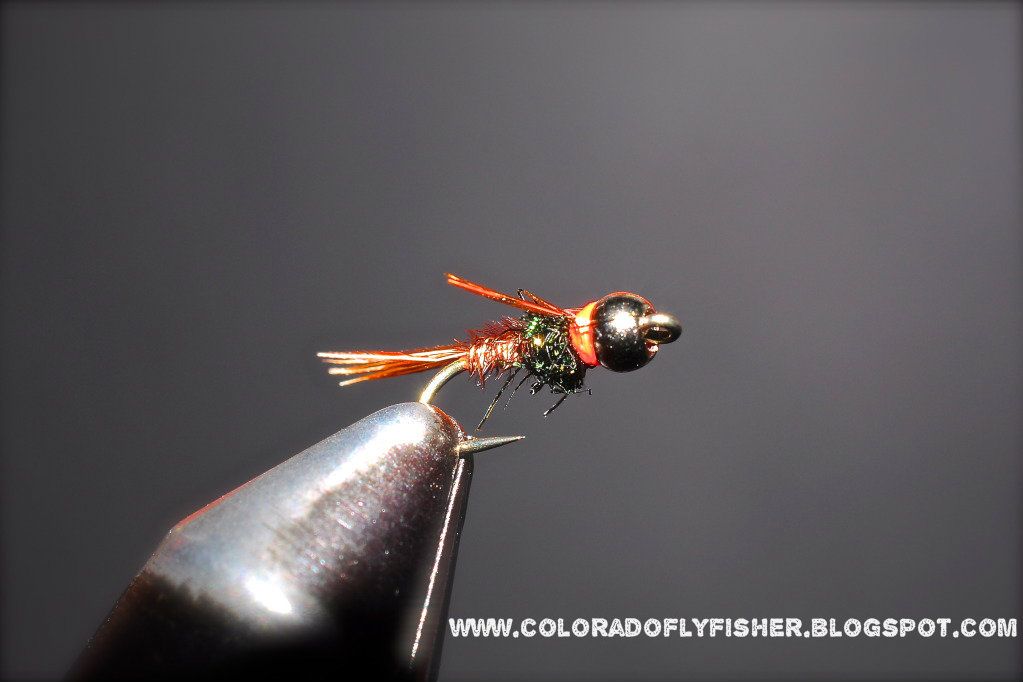
Kleis's Fly Of The Week - BH FB PT


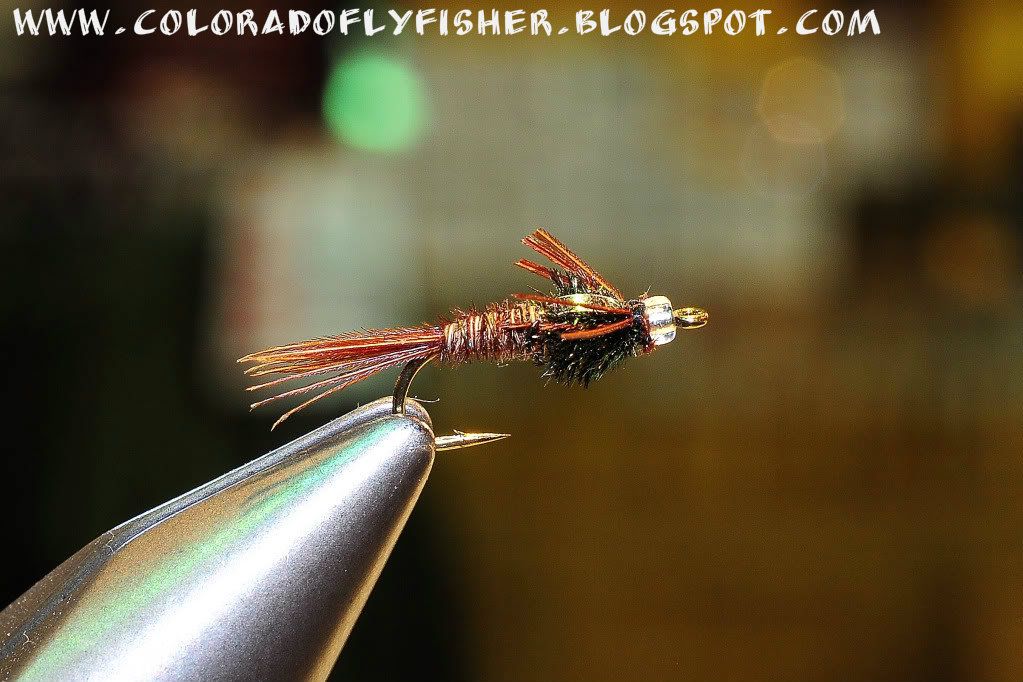
The Bead Head Flash Back Pheasant Tail nymph is a staple that just about anybody who has fished a nymph rig has in their box.  The original Pheasant Tail was created by Frank Sawyer and was tied only using wire as a thread and pheasant tail fibers.  Franks original has spawned many variations including the one I tied above since.

Hook: Orvis Big Eye
Bead: Spirit River Brass Nickel 
Thread: UTC FL. Fire Orange
Wing Case: Lateral Scale Crystal Flash
Tail: Pheasant Tail Fibers
Abdomen: Pheasant Tail Fibers
Rib: Small Copper Wire
Thorax: Peacock Black Ice Dub
Legs: Pheasant Tail Fibers
Head Cement Finish: Sally Hansen Hard As Nails


The Pheasant Tail is one of those generic patterns that could be mistaken by a trout for just about anything depending on the size PT you are fishing and the time of year.  The two hatches that I have seen on the South Platte and Arkansas River that this fly best imitates are the Pale Morning Dun nymph and the Yellow Sally Stonefly nymph.  I can't even fathom the amount of Pheasant Tails the fish in our river systems see which is why I think it's important to give them different looks.  Some people prefer Gold beads to Silver.   Some prefer to use a red collar as apposed to the hot orange as shown above.  Flash Back or no Flash Back, etc...  They all catch fish!  Here is a pretty cool Black and White video of Frank tying the original!  


Sunday, July 29, 2012

Kleis's Fly Of The Week - Barr's Damsel Nymph

Damsels are a great bug for stillwater anglers to imitate during the dog days of summer.  Many anglers new to the sport have inadvertently imitated the nymph stage of the Damsel with an olive leech pattern or Wooly Bugger.  All this under the assumption that the fish were taking their flies as a baitfish of some sort, and in some cases that would be a safe bet.

Fish are also taking those olive leech patterns as Damsel nymphs.  Damsels have paddle shaped tails, and resemble a small baitfish or fry in both color and profile.  They are also readily available to trout in nutrient rich ponds and lakes that have plenty of vegetation.  

John Barr is a famous Colorado tyer that has created a number of productive fly patterns including the Copper John so it shouldn't surprise anyone that his stillwater bugs catch fish as well.  His Damsel Nymph is a very clever representation of the insect that everyone should have in their boxes.  Fish it under an indicator as part of a two fly system, or by itself with short strip retrieves.


Barr's Damsel


Sunday, July 22, 2012

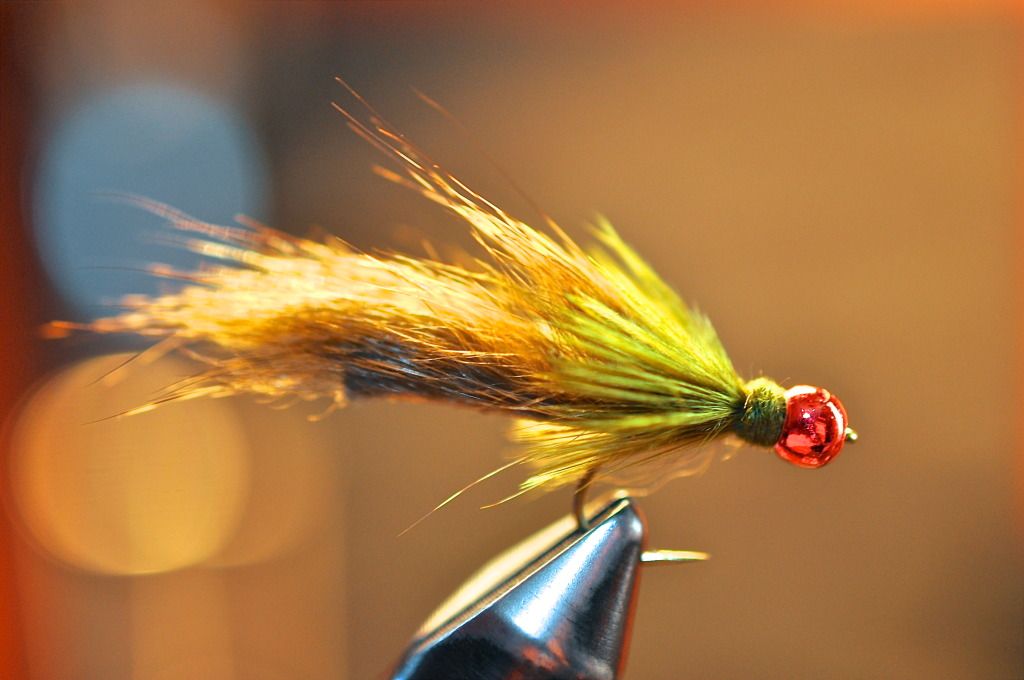
Christmas In July Mini Bouface


Click to enlarge


Was getting nutty behind the vice and took a photo of my work.  I figured Id share it with you guys thinking it might inspire someone.  Hope everybody is getting ample opportunities to play outside and harass some fish!

RECIPE

Hook: TMC 2488
Bead: Lucent Christmas Red Tungsten
Tail: Olive Pine Squirrel
Rib: Medium Red Wire
Collar: Olive Marabou
"Thorax": Olive Marabou 

Kleis's Fly Of The Week - Murphy's Bubble-Back Midge


Rick Murphy's Bubble-Back Midge is a Rainy's pattern, and has been a local favorite for years.  It is produced in black, olive, and gray and can be taken as a midge pupa or an emerging baetis.  Try fishing the black color on the South Platte or Arkansas tailwaters during the Trico hatch, and of course during the winter when midges are the main staple.  The gray and olive Bubble-Backs are both great spring time colors when Baetis are emerging. The beauty of this pattern is that midges are on a trout's menu year around so it's a safe bet to fish this as a dropper behind whatever dominant hatch you are imitating and you will catch fish.   It is only available through Rainy's in size 22 so if you want to tye them up in a different size I have included a how to video done with the creator himself.  Give these a spin and I promise you won't be disappointed.     


Sunday, July 15, 2012

Kleis's Fly Of The Week - The South Platte Brassie


The South Platte Brassie is another older pattern that has been my go to midge imitation for the tailwaters along the South Platte river drainage.  There are very few times of the year when you can't catch fish on the Brassie when fished as a dropper behind a Caddis or Baetis imitation.  It has enough weight on its own to be fished as a dropper behind your favorite attractor pattern as well.  Good sizes to have available in your box range from size 18-24.        

Tuesday, July 10, 2012

Kleis's Fly Of The Week - The Peacock Caddis


The Peacock Caddis is an oldie but goodie that is a great imitation of many of the darker bodied Caddis that hatch in our local waters.  Try this fly in tandem with smaller hard to see Trico imitations in 11 Mile Canyon, or by itself during the afternoon/evening Caddis hatch anywhere on the South Platte.  Small stream anglers should have a baker's dozen of each size in their box.  The Peacock Caddis is also a great generic dry fly for fishing stillwater.  Caddis in general are extremely overlooked as a viable food source for trout in our ponds, lakes, and reservoirs.  Good local places to try the Peacock when fish are on top are: Rosemont Reservoir, Crystal, South Catamount, North Catamount, Quail Lake, and Pikeview Reservoir.     

Monday, June 11, 2012

Learn How To Tye The Hybrid Hopper!


My two favorite attractor dry flies on the planet are the Parachute Hopper and the Stimulator.  To this day it is impossible to find a more realistic hopper imitation than Schroeder's Parachute.  Like many people I have only ever had one complaint about this pattern.  The wing on the Parachute Hopper is made from mottled turkey feather that falls apart and absorbs water after only landing a few fish.  The obvious solution is to change the wing material.  Other changes I made to the design were to use the hook (TMC 200R) and the thorax of a Stimulator.  

Tying a parachute is a time consuming step so I figured why not simplify the parachute hopper and lose the chute.  I also love the contrast between brown hackle and any bright colored dubbing used as an under body.  It is for this reason that I combined the two patterns to make the Hybrid Hopper.  Making the abdomen and legs similar to the Parachute Hopper, and a wing and thorax similar to the Stimulator.  My advice to all you trout bums is to sleep in late on your next day off.  Show up anywhere on the South Platte river after 2pm with a dozen of these, and take your time wadering up.  Maybe even have a chat with one of the many early birds that are now calling it a day.  Then spend the rest of your afternoon pounding the bank and covering water while you have the entire river to yourself.  I promise it will be one of the best trips you do all year!  Tight Lines!         


Wednesday, March 14, 2012

Bouface Madness!

I taught my lady how to tie the Barr's Bouface the other night, and as always she picked it up in no time.  The following day while I was at work I started receiving texts with photos attached of Bouface's that she had been tying.  You read this right!  I was at work, and she was at home tying flies!  Not just tying any Bouface's, and considering we only carry and sell a few basic colors in the shop I think she took one of my favorite streamer patterns to another level.  Proving yet again why if the female gender wanted to they could easily dominate this sport.  Everything I have taught Kristen she has picked up faster than anyone I have ever seen!  This is only the second pattern I have shown her since she began tying.  The first fly she ever tied being a size 24 Kleis's Mojo Midge...  Check out her work!


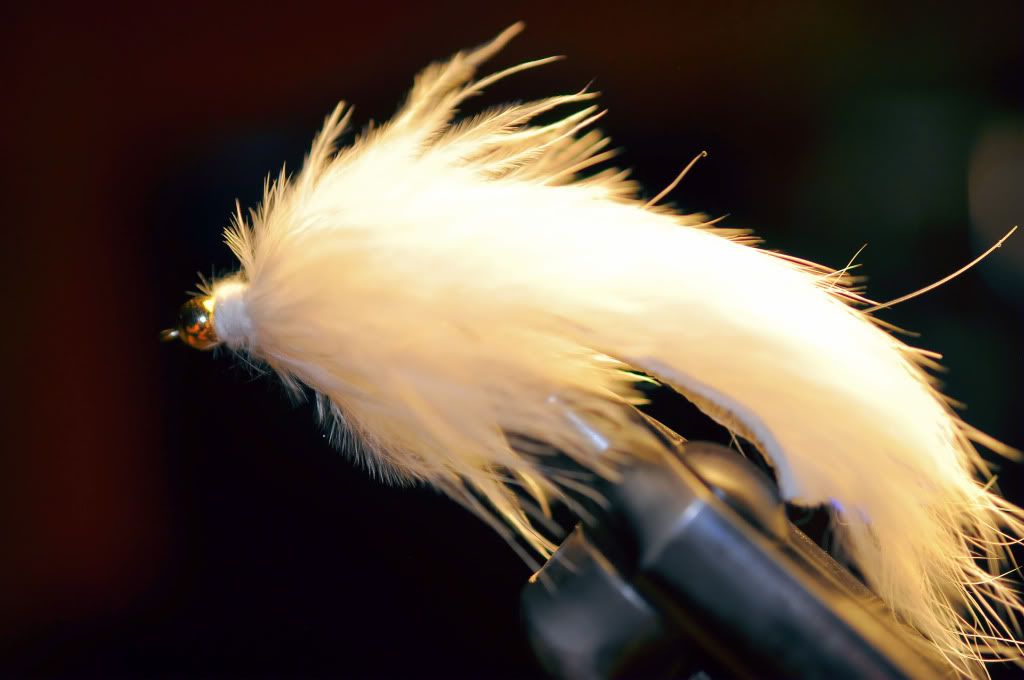
White 


Black and Purple


Black and Purple


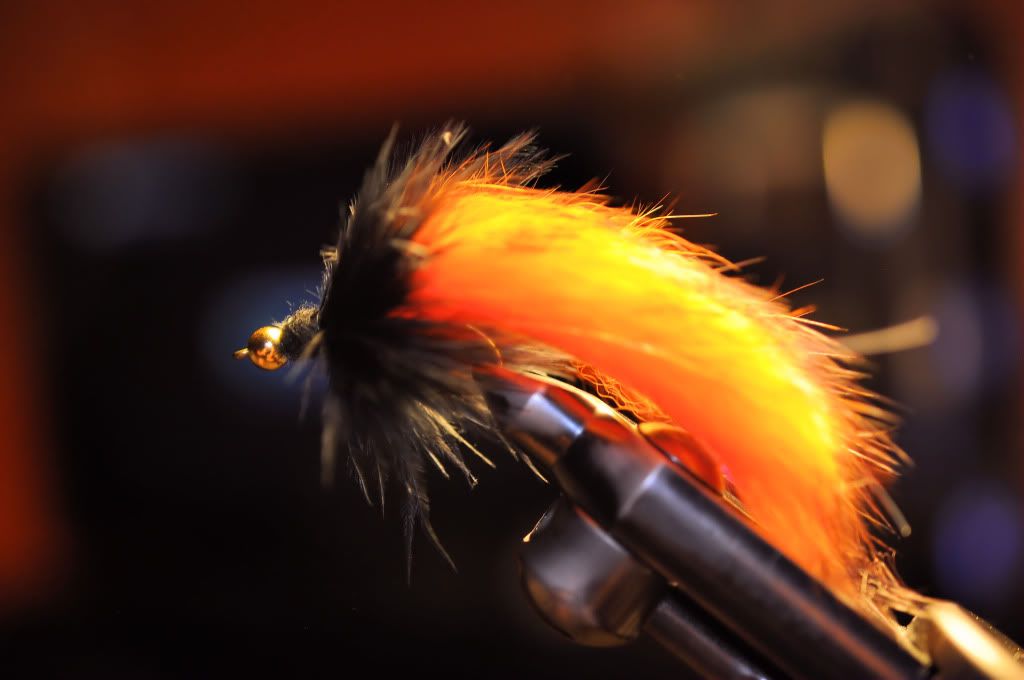
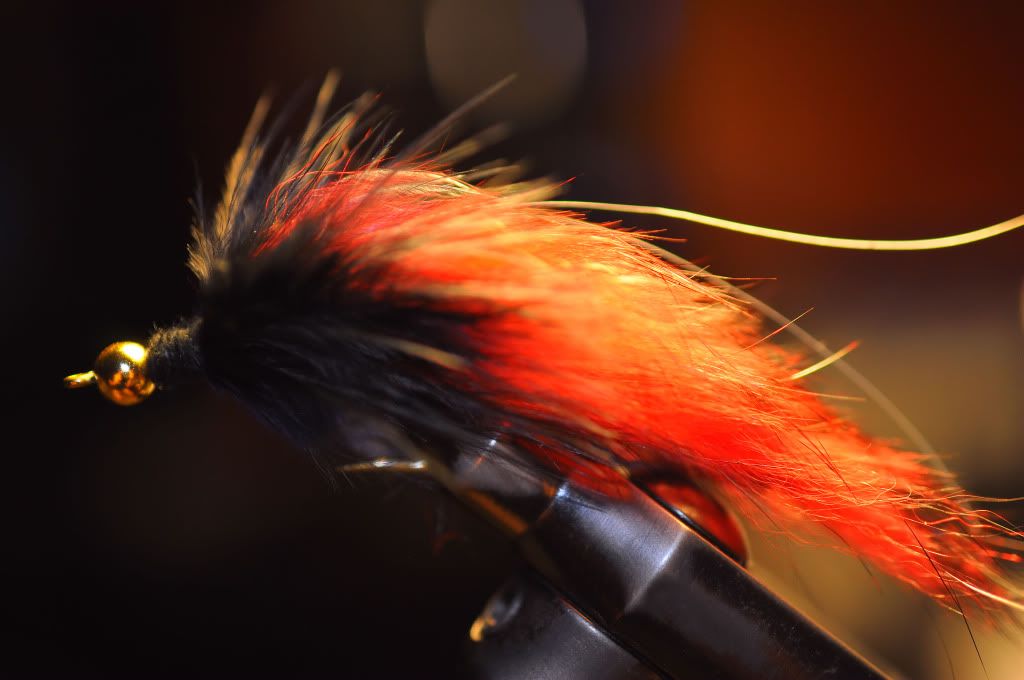
Orange and Black


Orange and Black


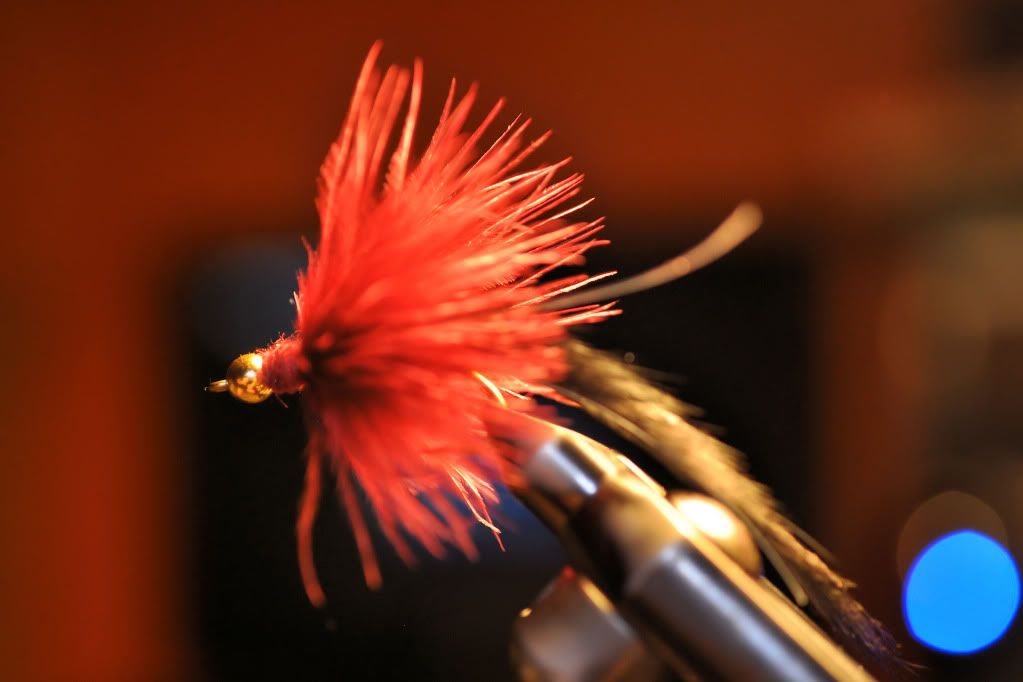
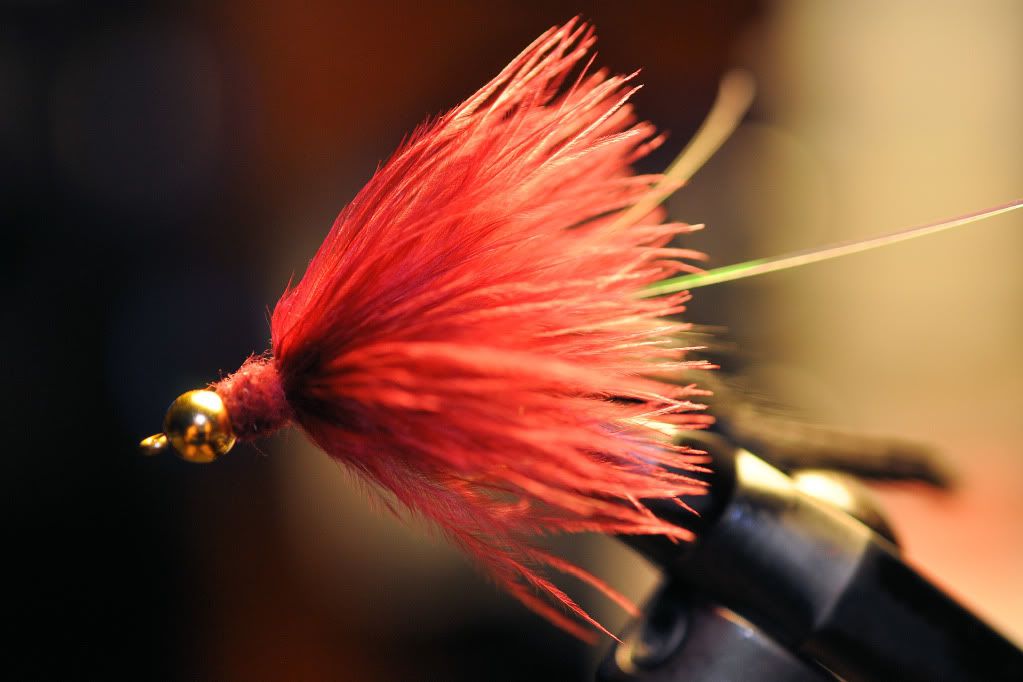
Red and Black


Black and Olive


P.S. 
Forgive the crappy photos.  I am being forced against my will to use a different editing software, but I promise it will get better.

Thanks and tight lines!

Saturday, November 26, 2011

Kleis's Top Ten Flies For Colorado

The subject of someone's personal favorite flies to have for a specific area or time of year always sparks coversation. There are a hundred different fly patterns to imitate one insect, or even one stage of an insect's life cycle. This can make things confusing for anyone just getting into the sport.

I've compiled a list of my top ten must have flies for Colorado that I both guide and fish with a ton of confidence.  This list is not color or size specific, but the photo's of the patterns shown are what I prefer when using these flies. We'll start with number ten and work our way up the list, examining why I prefer each pattern, and what times of the year they are most effective.

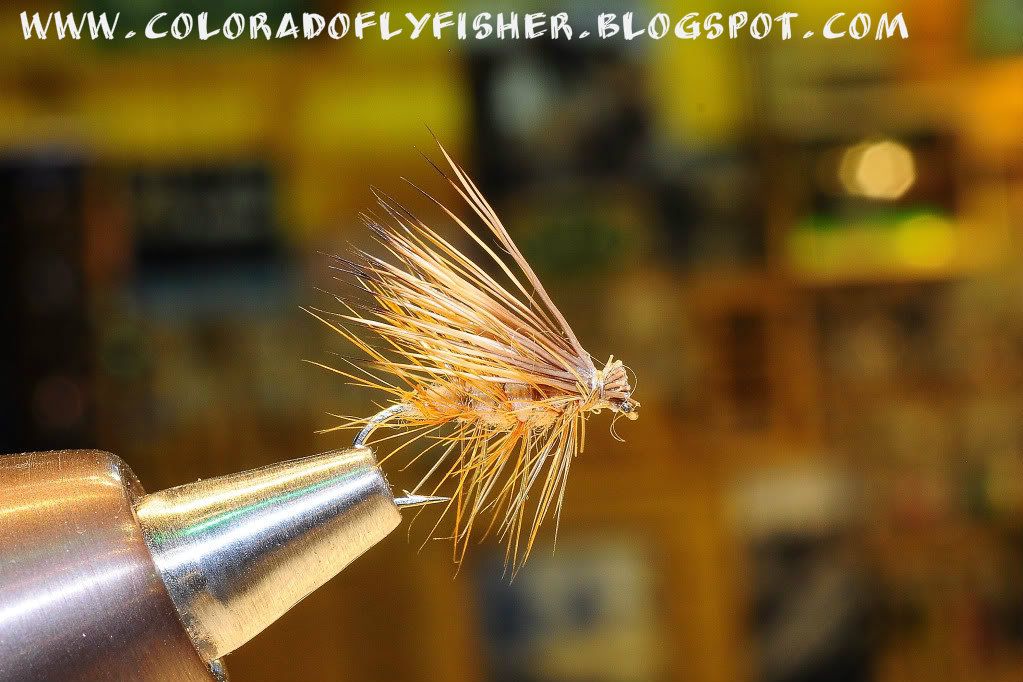
Number ten is the perfect example of why people shouldn't sleep on the classics. There's only one other dry fly pattern that I've landed more fish with, and that pattern graces number one on the list. The Elk Hair Caddis in sizes 14-18 is a must have dry fly for Colorado.  Anywhere there are caddis hatching in the spring and fall, it's a safe bet that you can catch fish with some flavor of the Elk Hair.


#10 Elk Hair Caddis


The best times of year to use this pattern are from the beginning of April through the end of June, and again starting around August through October. Size 18 in the color tan is what I prefer to use to imitate most adult caddis. It might surprise some anglers that caddis aren't limited to small streams and rivers, and that they live in lakes and reservoirs as well.  In fact, the Elk Hair is a go to fly pattern for many stillwater fly-fishers. Try one in a larger size when you see fish on the surface at your favorite lake.


The hollow elk hair used for the wing, and the hackle feather the fly is wrapped with, give it great air trapping qualities. The Elk Hair Caddis rides high on the water's surface and floats well without a lot of special treatments such as gink, or other silicone based floatants. It's hard to beat true originals so be sure to save an entire side of your dry fly box dedicated to the Elk Hair Caddis, and you'll be well on your way to consistently catching fish on top.


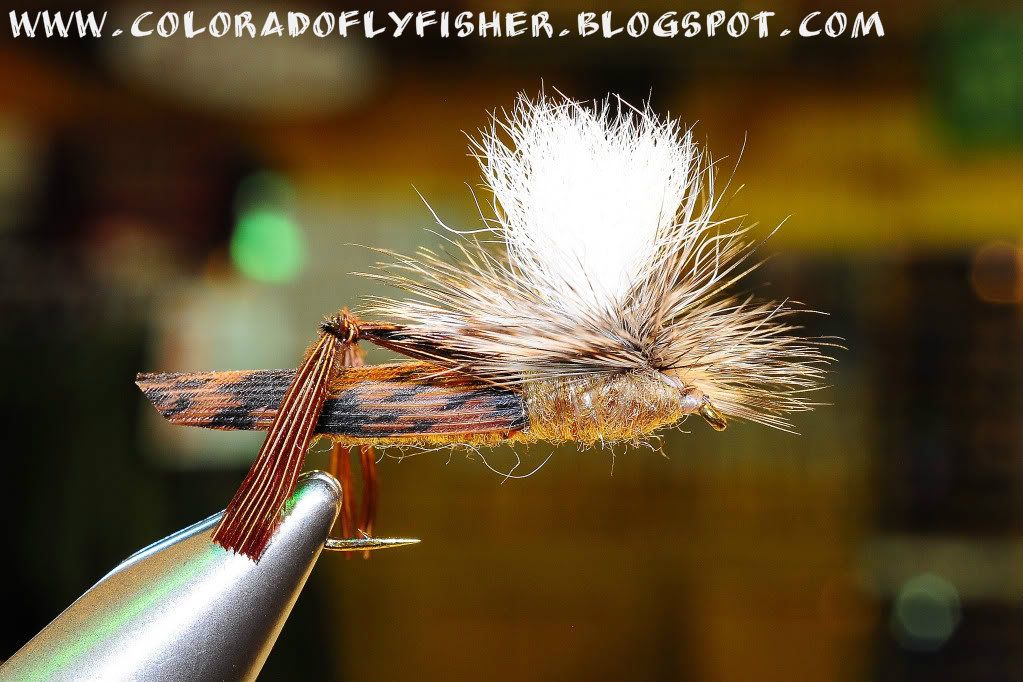
#9 The Parachute Hopper


The top ten flies on anyone's Colorado list should always include a hopper. Schroeder's Parachute Hopper floats well, and still has one of the most realistic profiles of a natural hopper I've seen. It does start to get soggy and sink a little after catching a few fish, but that problem is easily solved with some floatant.  Also, the wing on this hopper gets beat up pretty easy, which depending on who you talk to, is a good or bad thing. These are small prices to pay for a near perfect representation of a grasshopper.


The best time of year to fish hoppers is in late summer starting around the end of July, and lasting through the end of Sept. When real hoppers hit the water they sit low in the surface film because they are heavy and clumsy, which is why I prefer the parachute style.   Just like the Elk Hair Caddis, this is a great small stream fly. Throw delicate presentations out the window when fishing with hoppers. Deliberately cast this fly so that it hits the water hard, and makes a lot of noise. Fish tight up against the bank and close to cover.


Many anglers have replaced strike indicators when nymph fishing with hopper patterns by attaching a length of tippet to the bend of the hook of the hopper, and at the other end of the tippet, attaching a weighted nymph. This set up is called the hopper/dropper rig, and is extremely effective because you're covering more than one base with your flies (dry flies, and subsurface nymphs).


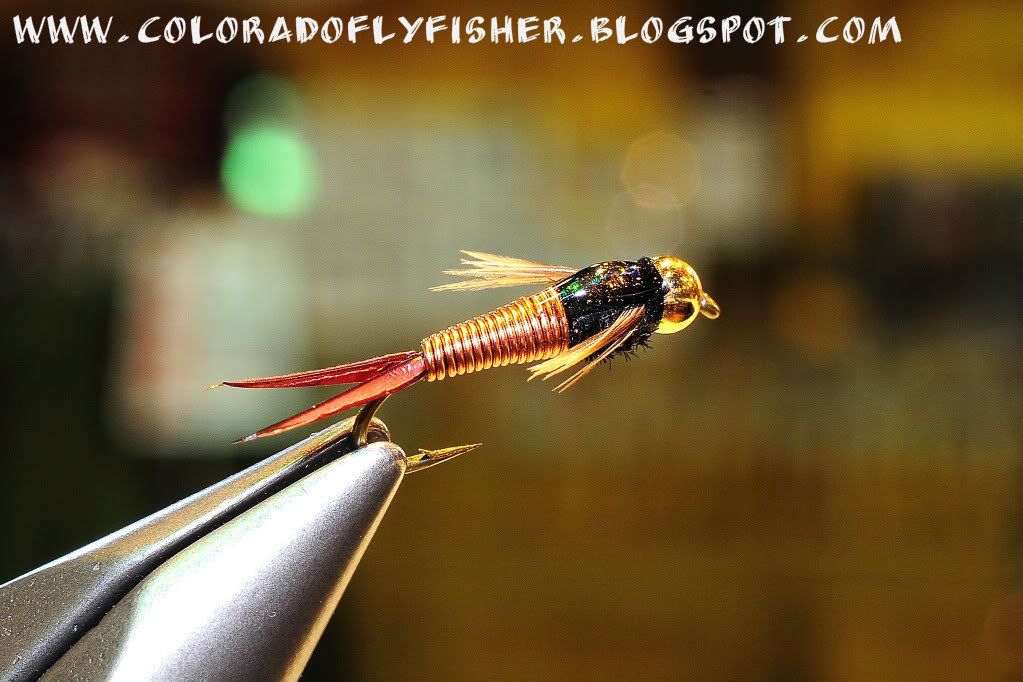
#8 The Copper John


The Copper John is the number one selling fly in America! It was created by Colorado tyer John Barr. Made with wire, and a brass or tungsten bead, this pattern is designed to get down to the fish quick.  The Copper John is what many might call a "generic" pattern. Being generic isn't a bad thing. All that means in the flyfishing and tying world is that you can imitate many different bugs with this one fly.


In fact, what I love most about the Copper John is that, depending on what color and size you tie it in, you could imitate a mayfly nymph, a stonefly nymph, a caddis larvae, or even a Caddis pupae (emerging caddis). Red Copper John's sizes 18-20 are one of my favorite attractor patterns in the spring and fall when trout spawn and are being aggressive. This nymph pattern can be fished in every form of water for every fish species that we have in our beautiful state, and is a great fly to hang under a hopper. If you have a good portion of your fly box dedicated to Copper Johns you're well on your way to consistently catching fish below the surface.


#7 The Pheasant Tail Nymph


The Pheasant Tail Nymph is another generic, and iconic pattern (noticing a trend?).  It was created by Frank Sawyer in the 1950's, and slays fish on a regular basis. This nymph imitates anything from small Midge larvae to Yellow Sallie Stonefly nymphs, and has spawned quite a few variations on a theme. It fishes great with different styles of beads; including the glass bead shown in the photograph. This version is called the Mercury Pheasant Tail, and is a modification made by Pat Dorsey designed to give it more flash, and also imitate a trapped air bubble similar to what you would see on an emerging insect.


This Pheasant Tail (P.T.) is another one that you can tie or purchase with a heavy tungsten bead, and fish beneath a hopper or Elk Hair Caddis as part of the "hopper/dropper" system. A size 18 Pheasant Tail is a near perfect representation of the Pale Morning Dun Mayfly nymph, which can be found in many of Colorado's rivers and small streams from July to the end of August. Carry them in a size 16-18 to imitate PMDs. My main reason for putting this fly above the Copper John on the list is simply because I've landed more fish with it. This entire list is biased, and based off of my personal experience!


#6 The Sculpzilla


My streamer of choice is the Sculpzilla. The sculpin is a small fish that has 11 different families, and can be found in many of our bodies of water. The sculpins that I've seen in Colorado, and the one's most imitated by fly tiers, are olive in color.  They have big heads similar to a catfish -without the whiskers- and large dorsal and pectoral fins. Though they're a forage fish for trout and many other sport fish found in Colorado, it's a rare occurrence to see a sculpin. I don't know if it's because they mostly stick to the bottom of lakes and rivers, or if they only exist in small numbers.


The fact that Sculpins can be found in Colorado is not why I love this pattern. The massive bead head gives this streamer enough weight to get down through the water column quickly without needing a sink tip line, or additional weight added to your leader. What makes it even more affective is the stinger hook in the back. Many streamers only have one hook, and 99 percent of the time that hook is located way up front on the fly. More often than not, when a fish strikes a streamer it is attacking the fly from behind, which means that you get a lot of short strikes. A short strike is when a fish is chasing your streamer, and hits the fly on the tail, often just short of making contact with the hook.


Tyers got smart and started tying articulated patterns with hooks in the tail. The realistic shape, weight, and the stinger hook, all culminate into what's by far my favorite streamer on the market. Olive (as pictured) is my favorite color to use, and has been a lip ripper for me since I started using them a few years ago.


#5 The Barr's Emerger


The Barr's emerger is another great John Barr pattern that I have a ton of confidence in. A mayfly spends most of it's life under water as a nymph. It's only when the temps and conditions are just right that these insects emerge off the bottom, and break free from their nymphal shuck. This process is similar to when a snake sheds it's skin. Under that nymph exoskeleton is the adult dun mayfly.


The emergence is when these insects are most vulnerable. This is because they're using trapped air bubbles to carry them off the bottom and up through the water column. Being pushed by the current, and completely exposed, this is when they are an easy meal for a hungry trout. There are 3 major mayfly hatches that John Barr ties his emergers for, and all three are important for Colorado. The Pale Morning Dun Emerger (as pictured), the Blue Wing Olive Emerger, and the Trico Emerger are all available in appropriate sizes. The Barr's Emerger is number 5 on my list, because during spring and fall, the Blue Winged Olive variation of this fly has fooled many of my largest trout.


#4 The Glow Bug Egg


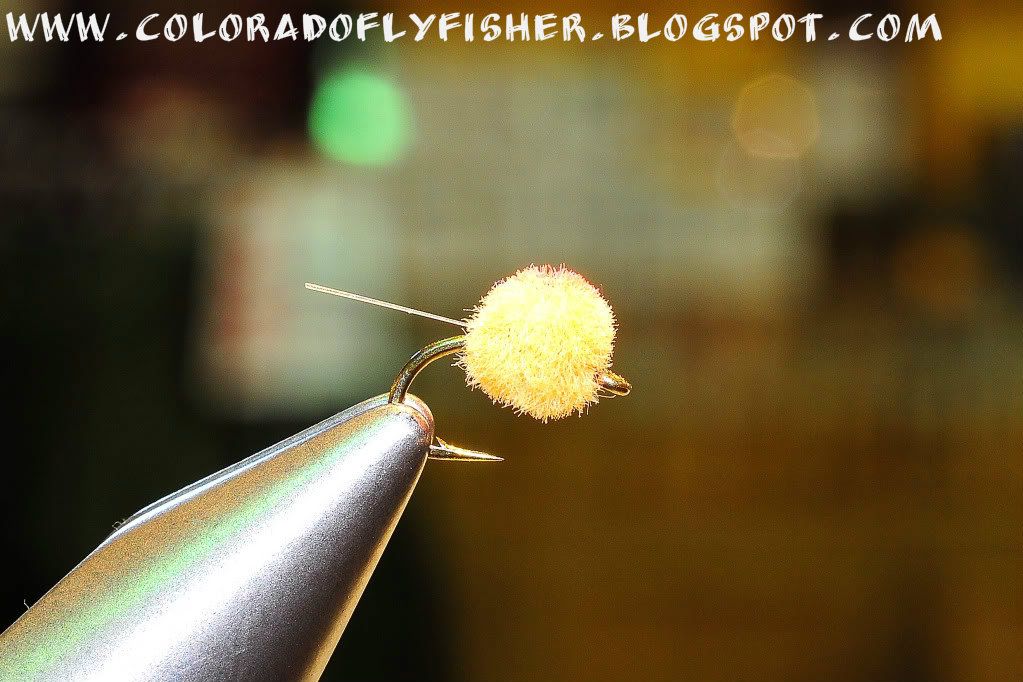
It would be impossible to find a better attractor pattern that catches all species of trout and salmon than the Glow Bug Egg. The apricot/orange color with the flame red dot on the top is still the closest I've seen to imitating a brown trout egg. Tied with a little extra flash, the glow bug will immediately grab every trout's attention within a ten foot radius. From March through June and again from late August through October are my favorite times to fish eggs.


It's important to watch how the fish react to the egg during those moments of clarity when you can see it under the surface. Sometimes egg patterns can actually put fish down, even if you think the conditions, and time of year are right to use them. If you fish an egg in faster water that you know is holding fish, and you don't get a strike within the first ten drifts, switch flies because you could be attracting the wrong kind of attention.


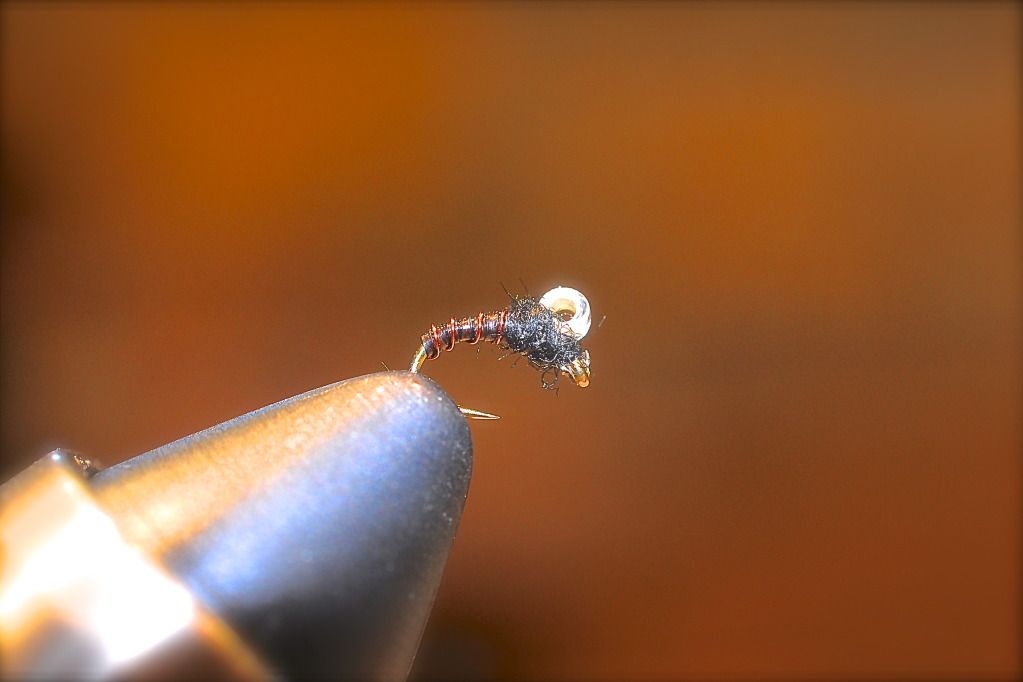
#3 Mercury Black Beauty


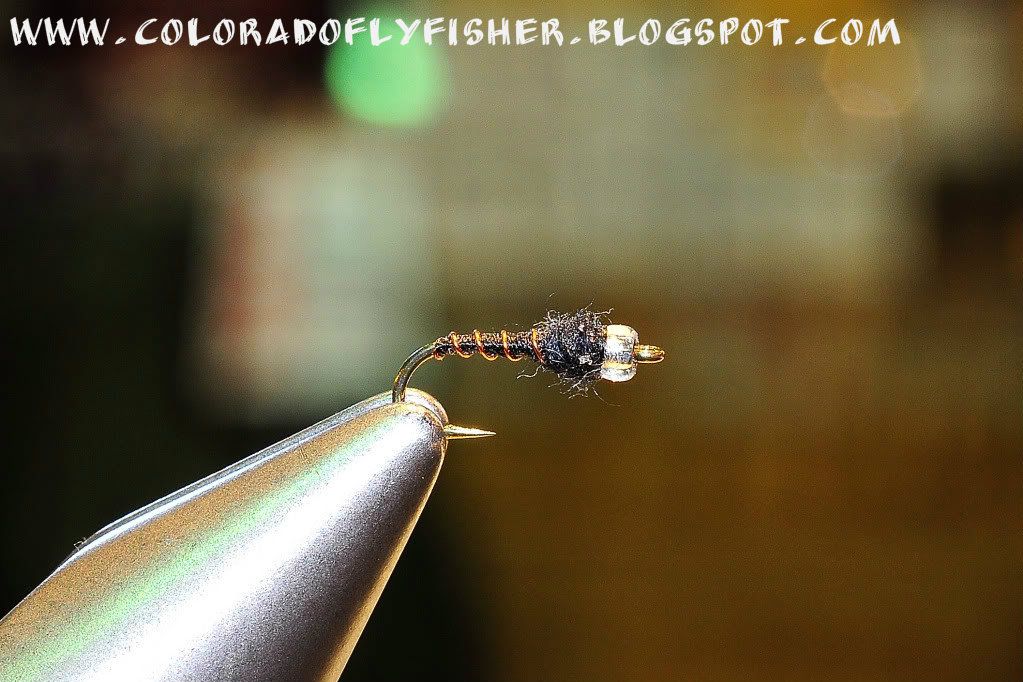
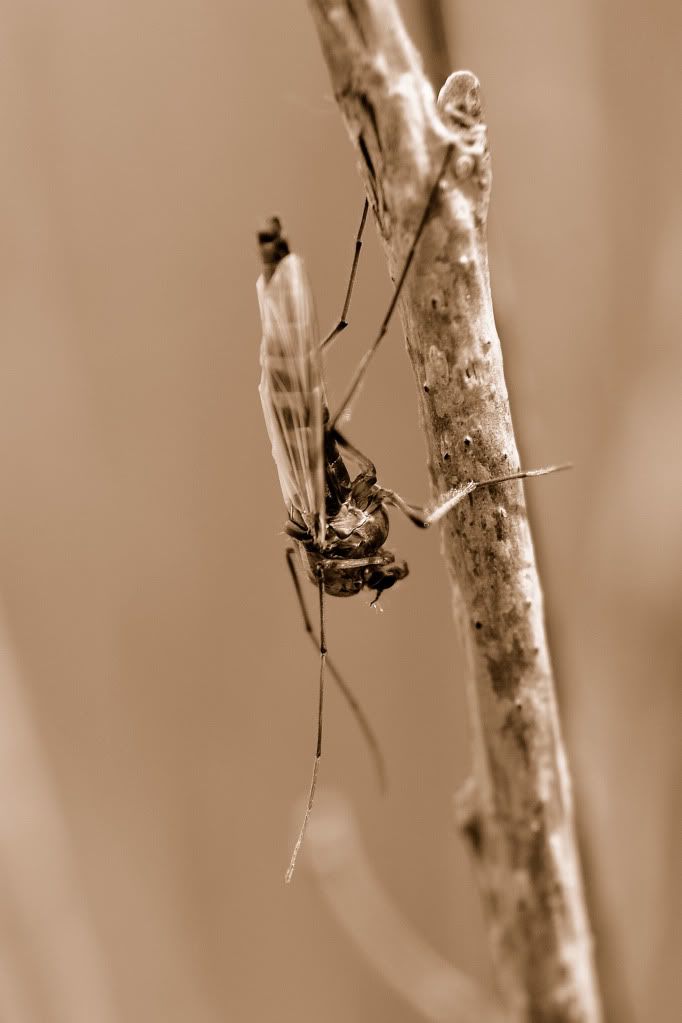
Number three on my list of killer trout flies for Colorado is the Mercury Black Beauty. It was created by Colorado tyer Pat Dorsey, and again, it has the omnipresent glass bead that Pat likes to put on many of his fly patterns. The Black Beauty isn't very impressive looking, but it's an extremely effective midge pattern, and is important to Colorado and many rivers throughout the country because there are so many different varieties of midges. Midges hatch year around, and because these insects are always available, there's never a bad time to fish a Black Beauty as a dropper.   In fact, if you fished it as a dropper behind a red Copper John for an entire season, I would bet all ten cents in my wallet that you would have an extremely productive year of fishing.


Photo of an adult Chironomid Midge


The Black Beauty is a great winter tailwater pattern. If you can't tell be looking at it, the Black Beauty doesn't weigh very much, so it would be best to trail it behind a heavier nymph, or put a little weight in front of it to help get down to fish when they are hugging the bottom. Sizes 20-26 are typically what I use which means that 5x and 6x leaders and tippet are a must just to be able to fit your line through the eye of most hooks. Starting from July through early October the Black Beauty also does a great job of imitating a spent trico.


#2 The RS-2


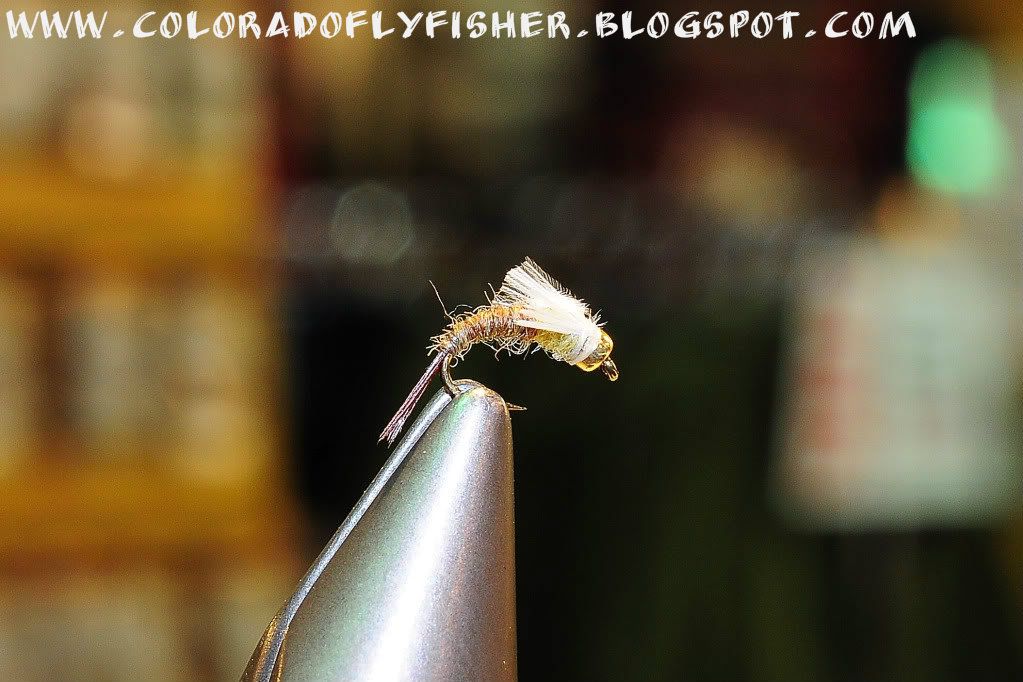
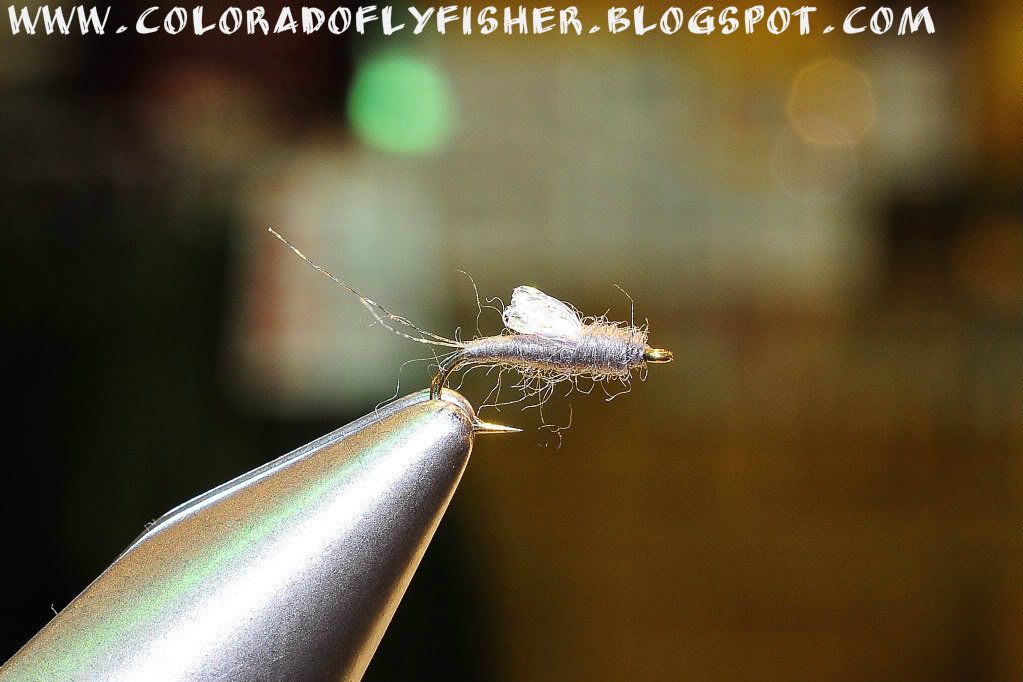
The RS-2 was created by Colorado tyer Rim Chung, and is another oldie but goodie that has spawned many variations on a theme. The name RS-2 stands for Rim Semblance number two. It is my understanding that he created it to imitate any kind of emerging insect, but it best imitates a blue winged olive mayfly emerger.


The above photo is of a variation of the RS-2 called a Sparkle Wing, named appropriately for the flashy material used for the wing, and is a redesign by another great Colorado tyer Charlie Craven. Of course, Pat Dorsey put his mark on this pattern by throwing a clear glass bead on it for good measure. The Mercury RS-2 is the perfect pattern to fish in faster pocket water during spring and late fall because of the extra flash given off by the bead. The Charlie Craven Sparkle Wing RS-2 is my favorite to fish in the surface film. I guide and fish with light dun colored RS-2's in sizes 22-24 during spring, and olive or black in the same sizes during fall.


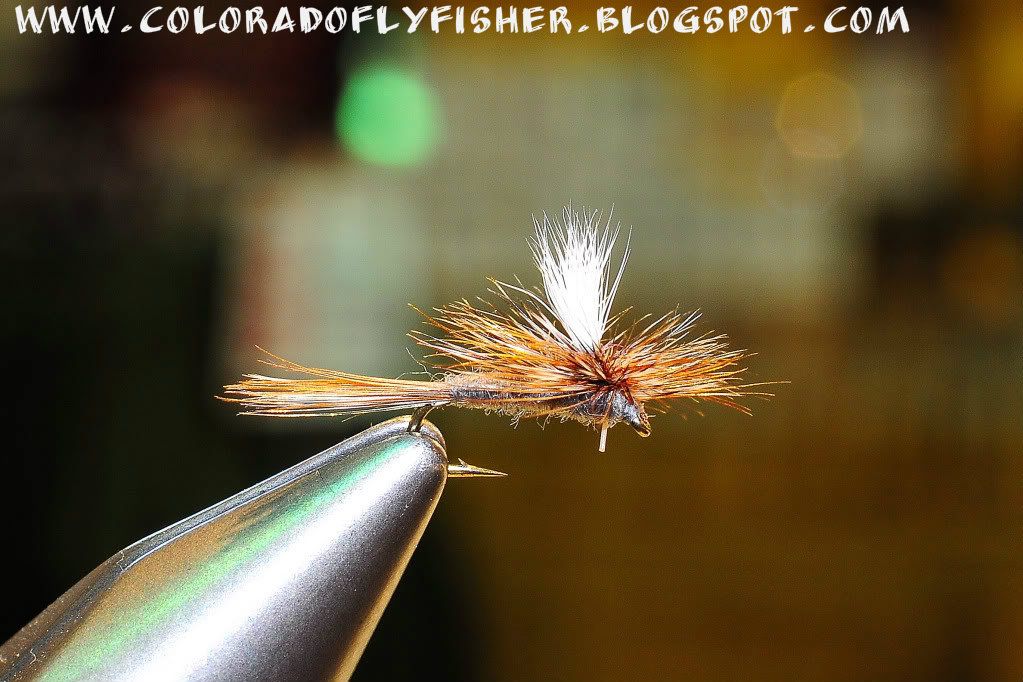
#1 The Parachute Adams


It didn't seem right not to have the most productive and iconic dry fly on the list.  Out of all the dry flies I've fished, the Parachute Adams has landed more for me than all others. Beginning tyers, tying this pattern in smaller sizes will push you to become better. And the Adams will ultimately be one of your first goto flies when trout have their noses up.


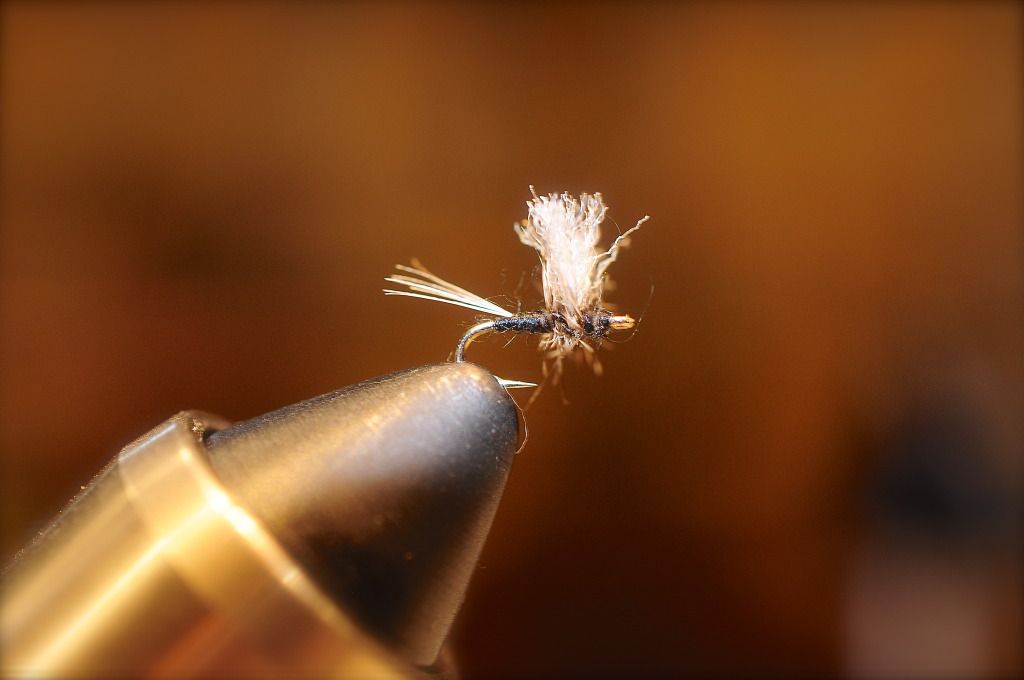
The Parachute Adam's is consistent with the theme of generic patterns that never seem to stop catching fish; lasting through the ages. It's a very visible pattern with a parachute post made of white calf body hair. It floats great, and sits low in the film. Tied in larger sizes (sizes 14-18) this fly is fantastic for imitating adult Caddis, or Callibaetis in lakes and reservoirs. A size 22-26 Parachute Adams can be taken as an adult b.w.o. or a midge in rivers and small streams. During the colder months on any of the tailwaters we have here in Colorado, a size 26 Adams will consistently fool selective trout. If your target fish are being extra picky, an old guide trick that has worked wonders for me, is to clip off the tail. The clipped tail gives it a smaller profile that's closer to a midge, and it might surprise you how much of a difference little things like that can make.


Noticably missing from my list are the San Juan Worm, Prince Nymph, Pat's Rubber Leg, Stimilator, Wooly Bugger, and many other fly patterns that have become house hold names in the sport of flyfishing. Again, the flies on this list are just one experienced flyfishers take on what to carry in your box, forsaking all others, to give you the best chance to catch fish here in beautiful Colorado. All of the flies I just named that are not on my list are great flies, but I either haven't fished with them enough for lack of confidence, or caught enough fish with them to beat out what I chose.

Noticeably missing from my list are my own patterns. Even though I have an unlimited supply of confidence in my personal creations -many of which have landed more fish for me than the patterns on my top ten- it didn't feel right to put a bunch of patterns on the list that I haven't shared or submitted, and therefor, would be tough to find at a fly shop. At least for now...


So there you have it. Out of all the fly patterns you could throw to a rising fish, this new school fisherman and tyer with a taste for the old school, is telling you to tie on a Parachute Adams before anything else. If you carry a small box full of Parachute Adams in varying sizes you're well on your way to being that guy who everyone stops to ask what he's using. Thanks to everyone who has shown support for Colorado Fly Fishing Magazine!  If you enjoy our site please subscribe to www.coloradoflyfisher.blogspot.com and like us on facebook!


For rates and availability for guided trips contact me at jonkleisflyfishing@yahoo.com


Tight lines!


Monday, September 19, 2011

Drawing Of Kleis's Hybrid Hopper

We wanted to share with you guys something kinda cool that I'm very proud of.  Julie Sprinkle, who is a guide and shop manager at Anglers Covey, is also an incredible artist, and she drew an exact replica of one of my hoppers that I tie.  Being associated with Julie is flattering enough, when she told me she wanted to draw one of my patterns I was pretty much speechless. She represents for the ladies in the flyfishing industry and is well respected by all her peers and coworkers -she is a true original.  A lot of her flyfishing related drawings are done on greeting cards as reprints of her original artwork and sold in the shop, so of course I dropped the dough to buy a package.  Here is my hopper on one of her cards...


Also since were being all positive and warm and fuzzy I just wanted say thanks to Bruce Dellinger for the great compliment you gave me earlier about my blog.  A lot of hard work has gone into and will continue to go into this project and it was super uplifting to read the positive things you said man.  Thanks Julie and Bruce!

Friday, August 12, 2011

Kleis's Back To Basics "Bug Parts - The Adult Mayfly"

Ive decided to write several short articles aimed at helping people that are new to the sport better understand what everyone else is talking about.  There is so much hidden meaning behind what anglers say amongst each other and in the shop, as well as more acronyms than I think even the most experienced angler could remember in a lifetime so this is my attempt to help people just getting into the sport get caught up to speed.


This segment called "Bug Parts" is for new tyers.  When tying flies you hear people referring to what materials they used for the various parts of the bug they are tying.  For instance, "I used black fine and dry dubbing for the Trico's thorax".  For the second year tyer that might make perfect sense but for the rest of the human population what does that mean?


Photo and fly by Jon Kleis
Mayflies in both their nymph and adult stage's are divided into several different parts.  We will start with the adult mayfly.  The first and most obvious part is the tail which is followed by the abdomen.  The abdomen on the fly pictured is tied with black thread and a crystal flash overbody that is wrapped forward (wrapping a material forward is sometimes refered to as palmering or palmered) around the hook shank.  The second obvious part of this imitation of an adult Trico is the wing which in this case is tied with white Antron yarn and is laid out on either side and imitates a spent spinner.  The thorax is just behind the head of the fly where the wing connects and is the thickest part of the bug and is tied with thread for this example.   And of course the head of the fly is where you finished your bug and tied off your thread using a whip finish knot.


Click on photo to enlarge for a better view
This next photo is of a natural Trico spent spinner.  Adult mayflies become "spinners" when they mate and lay their eggs.  The mating ritual is towards the end of the mayflies life cycle.  After they lay their eggs they fall to the water from exhaustion in what we refer to as the "Spinner Fall" and then die.  The aerial dance combined with how the bugs look as they fall to the water to deposit eggs and die is how this stage of the hatch was named.  If a fly is tied like the one I made in the above photo with the wings splayed out to the sides it is refered to as a spinner.


Here is another example of a spinner.  Can you correctly identify the parts of this bug and what materials were used to tie each part?


Before Mayflies become spinners they emerge to become Duns which is the first adult stage of the bug after it has emerged and is free of its nymphal shuck.  The Dun trico has a short tail and tends to be a light olive or tan color instead of black like you see on a spinner, even though my favorite fly to fish all the way through the trico hatch from start to finish is the John Barr pattern called the Viz-a-dun and is black in color.  Duns also have strong wings that stand mostly upright.  The parts of the Dun as it pertains to tying are refered to using the same terminology as a spinner (tail, abdomen,wing, thorax).  Just be aware that there are different colors and traits such as the upright wing that you are imitating while sitting at your vice tying duns.


Click on photo for enlarged view of this Parachute Adams
The parachute adams is one of my favorite bugs to use when I know Baetis (also called the Blue Winged Olive, or B.W.O.) are emerging.   Around March on the South Platte River you will see tiny blue gray Baetis hatching starting at mid day.  Parachute flies are tied by anchoring your wing material (in this case white calf body hair) so thats it's facing up at a 90 degree angle.  Your hackle which normally forms your dry fly's thorax  is now being wrapped or palmered around the base of the upright wing to form a "parachute".  What is great about tying parachutes to imitate duns is that they have the upright wing and they also sit low on the surface film like the naturals would right after they emerge. 


Barr's Viz-a-dun Trico.  Notice the hackle is palmered around the hook to
form the thorax?  This is how it's done on most traditional dry flies tied with
hackle.


If there is anything I want you guys to take away from this read it is to have a better understanding of the four major parts of an adult mayfly pattern and also a clear understanding of what a parachute fly looks like and its benefits.  A really good book to purchase for tying mayflies is the late Shane Stalcup's book called "Mayflies Top To Bottom".  Also Ed Engle has a great book out that will help you get started tying those really tiny bugs for these technical Colorado tailwaters called "Tying Small Flies".  Both books are more advanced but still have helpful information for beginners. If you have enjoyed reading this post or my blog in general help keep it going by clicking the join this site button and subscribing!

To book me for a trip on the South Platte river shoot me an email at jonkleisflyfishing@yahoo.com

Thanks again and tight lines!


Sunday, May 29, 2011

Kleis's Czech Charles

Here is a Czech pattern I tied up to imitate caddis larvae on the South Platte.  It's basically a Ray Charles Sow Bug only tied on an Umpqua competition C500BL hook with lead tape at it's core to help it get down.   It was pointed out to me that a lot of the "Euro" Nymph patterns -aside from being thin in diameter which helps them get down quicker- have a "hot band" or "hot spot" where the tyer added a small amount of bright colored thread, dubbing, or in this case pink Ostrich Herl on the fly which helps grab the trout's attention. 


Start with a size 12 Umpqua C500BL and wrap 1/8 inch wide lead tape across
the hook shank to just behind the eye.


Follow that by attaching size small chartreuse colored wire, then attach either lateral
scale flash or large pearl tinsel after the wire at the bend of the hook.


Next step is to anchor two strands of olive ostrich herl at the bend and wrap
 (palmer) forward roughly half way up the hook shank. Anchor and follow that with a few wraps of pink (for the hot spot), and finish the thorax
with a medium to dark colored brown ostrich herl to complete the upper half of the fly.


The last two steps are to pull the flash over the top of the fly and anchor behind the eye.
Do tight wraps forward with the wire to behind
the eye of the hook and anchor your wire.


Here is the finished product.


Here is the finished product wet...


The Czech Charles

Thread: Black uni or 70 denier
Hook: Umpqua C500BL size 12
Abdomen and Thorax are Olive and brown
ostrich herl with pink hot spot.
Lateral Scale flash or large pearl tinsel
for the back.
Size small chartreuse wire for rib.


Contact Form

Name

Email *

Message *